

 English
 中文简体
中文简体 한국어
한국어 عربى
عربى

NEWS
Home / News / Industry News / How Does Carbon Black Masterbatch Dispersion Quality Affect the Mechanical Properties of Injection-Molded Parts?


How Does Carbon Black Masterbatch Dispersion Quality Affect the Mechanical Properties of Injection-Molded Parts?
Article Directory
- 1 The Science of Particle Distribution and Stress Concentration
- 2 Impact on UV Resistance and Long-Term Durability
- 3 Surface Quality and Die Buildup Issues
- 4 Technical Standards in Masterbatch Formulation
- 5 Conclusion: The Value of Precision Dispersion
- 5.1 Frequently Asked Questions (FAQ)
- 5.1.1 1. How do I measure the dispersion quality of carbon black in my parts?
- 5.1.2 2. Does a higher carbon black concentration always mean a better black color?
- 5.1.3 3. Can poor masterbatch quality cause my parts to become brittle?
- 5.1.4 4. Is carbon black masterbatch safe for food packaging?
- 5.1.5 5. How does dispersion affect the melt blown fabric process?
- 5.2 Industry References
- 5.1 Frequently Asked Questions (FAQ)
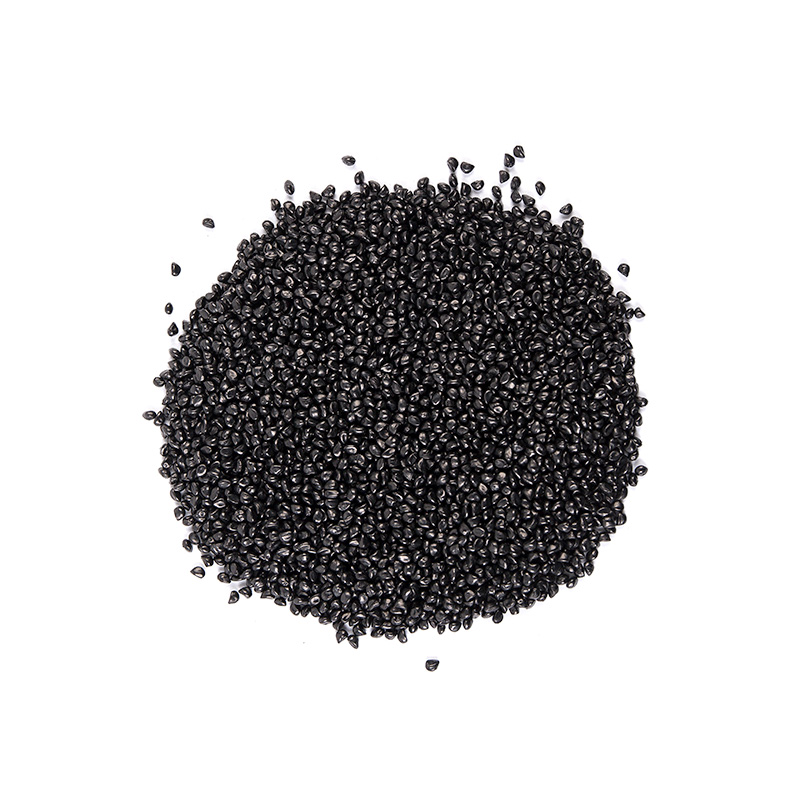
In the precision-driven world of polymer processing, the efficiency of a carbon black masterbatch is measured far beyond its ability to provide deep pigmentation. For engineers and manufacturers, the critical factor is dispersion—the degree to which carbon black particles are uniformly distributed within the polymer matrix. Changzhou Runyi New Material Technology Co., Ltd., a leader in the Yangtze River Delta for high-performance additives, understands that masterbatch dispersion quality is the cornerstone of structural integrity in injection-molded components. This article explores the technical correlation between particle distribution and final part performance.
The Science of Particle Distribution and Stress Concentration
At a microscopic level, poorly dispersed carbon black masterbatch leads to the formation of "agglomerates." These clusters of undispersed pigment act as foreign inclusions that disrupt the polymer's molecular continuity. While well-dispersed particles reinforce the matrix, agglomerates create stress concentration points that significantly reduce the tensile strength of black plastic parts. In contrast, high jetness carbon black masterbatch that has been properly processed ensures a homogenous blend, allowing for uniform load distribution during mechanical stress.
Mechanical Property Comparison: Dispersed vs. Agglomerated Systems
- Homogeneous Dispersion: Enhances the interface between the filler and the base resin, improving impact resistance.
- Poor Dispersion: Leads to premature crack propagation and catastrophic failure under low strain.
| Mechanical Metric | Optimized Dispersion | Poor Dispersion (Agglomerates) |
| Impact Strength | Maintains 95-100% of resin base | Drops by 30-50% |
| Elongation at Break | Consistent with material specs | Significant reduction (brittleness) |
| Surface Uniformity | Smooth, matte, or glossy finish | Visible "seeds" or pitting |
Impact on UV Resistance and Long-Term Durability
Carbon black is the most effective UV stabilizer for plastics, but its efficacy is entirely dependent on its surface area coverage. A UV resistant carbon black masterbatch works by absorbing harmful radiation and dissipating it as heat. If the dispersion of carbon black in polymers is uneven, large areas of the polymer matrix remain unprotected, leading to photo-oxidation and surface "chalking." Choosing the best carbon black masterbatch for injection molding ensures that the inter-particle distance is minimized, providing a continuous shield against ultraviolet degradation.
Surface Quality and Die Buildup Issues
Beyond internal strength, dispersion affects the manufacturing process itself. Improving surface finish with black masterbatch is impossible if the material contains micro-agglomerates, as these will cause surface defects known as "roughness" or "pitting." Furthermore, poor carbon black masterbatch dispersion quality often results in die buildup, leading to frequent downtime for cleaning. Modern high concentration black masterbatch formulations, such as those produced by Changzhou Runyi, utilize advanced carrier resins to mitigate these issues and maximize energy saving in masterbatch production.
Processing Efficiency and Rheology
- Melt Flow Stability: Uniform black masterbatch for melt blown fabric and injection molding ensures consistent viscosity during the cycle.
- Thermal Conductivity: Well-dispersed carbon black improves the heat transfer within the mold, potentially reducing cooling times.
Technical Standards in Masterbatch Formulation
To meet international requirements, Changzhou Runyi New Material Technology Co., Ltd. produces carbon black masterbatch for food contact and industrial applications according to rigorous international standards. Our research and development team, established in 2020, focuses on carbon black masterbatch for engineering plastics, ensuring that the additive does not compromise the high-performance characteristics of resins like PA6, PC, or PBT. By optimizing the "wetting" of the carbon black during extrusion, we maximize the carbon black masterbatch loading for injection molding without sacrificing ductility.
Conclusion: The Value of Precision Dispersion
Selecting a masterbatch is not merely a cost-per-kilogram decision; it is a quality assurance strategy. Superior masterbatch dispersion quality translates directly to fewer rejects, higher mechanical reliability, and a premium aesthetic finish. As a win-win oriented enterprise, Changzhou Runyi continues to innovate, providing the technological excellence needed to empower our global partners.
Frequently Asked Questions (FAQ)
1. How do I measure the dispersion quality of carbon black in my parts?
Dispersion is typically measured using the Filter Pressure Value (FPV) test or through microscopic analysis of thin film sections to check for agglomerate size and frequency.
2. Does a higher carbon black concentration always mean a better black color?
Not necessarily. While high concentration black masterbatch is efficient, the "jetness" (depth of black) depends more on the particle size and the quality of the dispersion than just the percentage of carbon black.
3. Can poor masterbatch quality cause my parts to become brittle?
Yes. Undispersed particles act as "stress risers," which significantly lower the tensile strength of black plastic parts and reduce the elongation at break, making the material brittle.
4. Is carbon black masterbatch safe for food packaging?
Specific grades of carbon black masterbatch for food contact are available. These must be produced with high-purity carbon black and approved carrier resins to meet FDA or EU regulations.
5. How does dispersion affect the melt blown fabric process?
In applications like black masterbatch for melt blown fabric, perfect dispersion is vital. Any agglomerate can clog the spinneret holes, leading to fiber breakage and inconsistent filtration performance.
Industry References
- ASTM D3265: Standard Test Method for Carbon Black—Tint Strength.
- ISO 18553: Method for the assessment of the degree of pigment or carbon black dispersion in polyolefin pipes, fittings and compounds.
- "Influence of Carbon Black Dispersion on the Mechanical Properties of Polymers," Journal of Applied Polymer Science, 2024.
- "Plastics Additives Handbook," Hanser Publishers, 6th Edition.
prevNo previous article
nextHow to Calculate the Optimal Let-Down Ratio for Plastic Black Masterbatch to Balance Cost and Opacity?

Popular products
The main products include various types of plastic film bags, such as takeout packaging bags, express bags, shopping bags, food composite bags, wrapping films, agricultural film, etc., and disposable dining utensils, such as lunch boxes, knives, forks, spoons, etc.
If you are interested in our products, please consult us
CONTACT DETAILS
- Address : 11-1, No. 600 Tongjiang Middle Road, Xinbei District, Changzhou City, Jiangsu Province
- Whatsapp : 0086-13775276672
- Tel: 0086-13401333666
- Email: [email protected]
QUICK LINK
NEWS CENTER
MOBILE TERMINAL
Copyright © Changzhou Runyi New Material Technology Co., Ltd. All Rights Reserved.
Custom China Antibacterial Masterbatch


 CONTACT US