

 English
 中文简体
中文简体 한국어
한국어 عربى
عربى

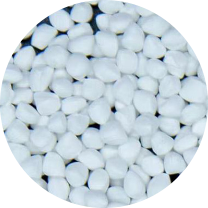

Injection White Masterbatch Manufacturers

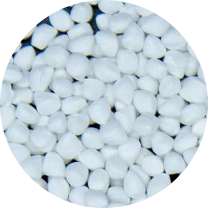
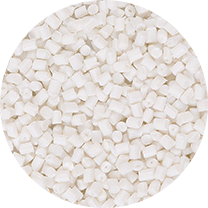
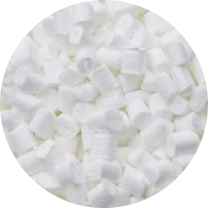
The white masterbatch can achieve a bright and opaque white color in plastic products. It has strong dispersion properties, minimizing the risk of streaks or uneven dispersion. The white masterbatch is compatible with a wide range of polymers, including polyethylene, polypropylene, and polystyrene, making it a versatile choice for a variety of plastic applications. The additive is widely used in industries such as packaging, automotive, construction, and household goods.
Product Category
Get in Touch With Us


Who Are We?
Changzhou Runyi New Material Technology Co., Ltd.
We are
China Injection White Masterbatch Manufacturers and
Custom Film White Masterbatch Suppliers.
Changzhou Runyi New Material Technology Co., Ltd. relying on the unique market and geographical advantages of the Yangtze River Delta, and through long-term unremitting efforts, has developed into a well-known color masterbatch production and sales enterprise that integrates research and development, production, sales, and export. Over the years, the company has cultivated a group of professional talents and has become the main force of the company, while accumulating rich production experience.
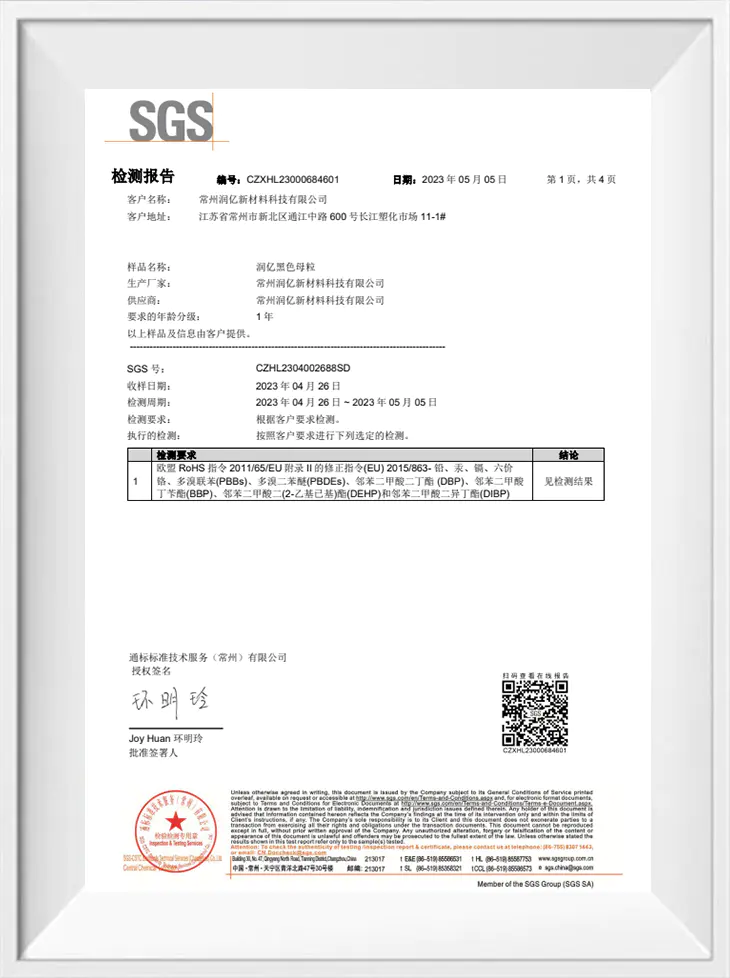
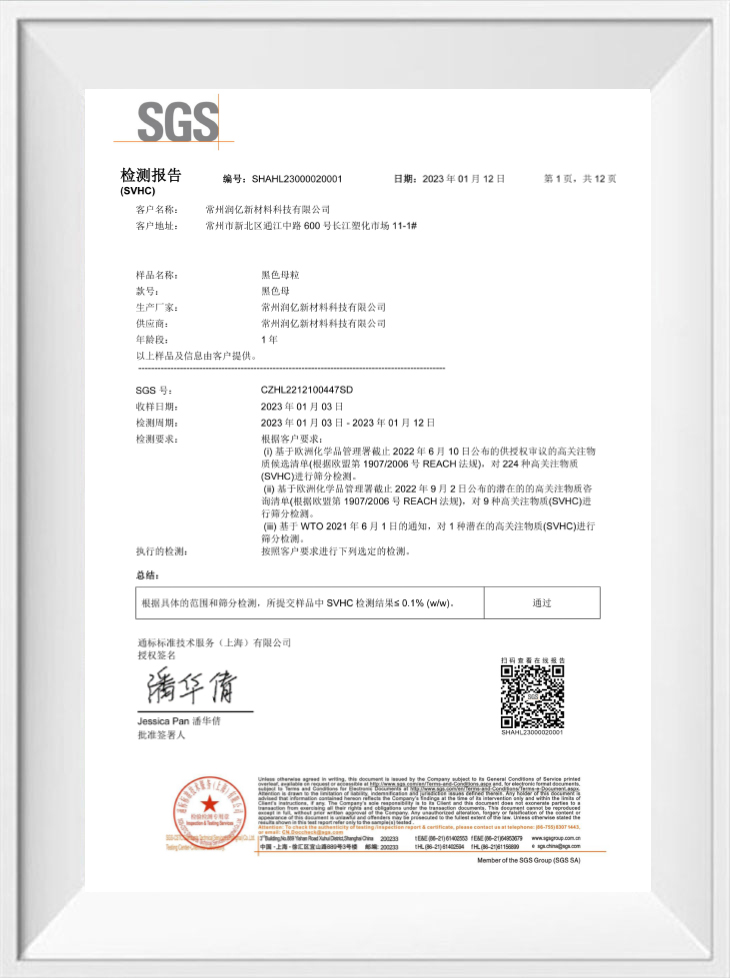
Popular products
The main products include various types of plastic film bags, such as takeout packaging bags, express bags, shopping bags, food composite bags, wrapping films, agricultural film, etc., and disposable dining utensils, such as lunch boxes, knives, forks, spoons, etc.
News
-
Why Injection White Masterbatch Is Widely Used in Moder...
Plastic manufacturers rarely add raw titanium dioxide powder to a mold anymore. Instead, injection white masterbatch delivers that same whitening power in a cl...
READ MORE -
How to Choose Injection White Masterbatch for Plastic I...
Technical Note Getting a consistent white across thousands of injection-molded parts is harder than it looks — raw pigment behaves differently batch to batch, ...
READ MORE -
How to Choose Carbon Black Masterbatch for Plastic Colo...
Choosing the right Carbon Black Masterbatch affects far more than the final color of a plastic part. The carbon black grade, its dispersion quality, and the c...
READ MORE -
Functional Masterbatch: Types, Benefits & Applications
Plastic manufacturers seeking consistent, scalable additive delivery have made functional masterbatch the industry-standard input across packaging, automotive,...
READ MORE
White Masterbatch Industry Knowledge Extension
Key performance indicators and selection guide for injection molding white masterbatch
1. Analysis of core performance indicators
Whiteness and hiding power
Titanium dioxide (TiO₂) content: usually 20%~50% (rutile type is better), directly affecting whiteness and hiding power.
Test standard: quantified by ISO 2470 (blue light whiteness) or Hunter Lab value, high whiteness needs to be ≥95% (such as daily necessities, electronic housings).
Dispersion uniformity
Carrier resin compatibility: Need to match the substrate (such as PP, ABS, HDPE, etc.) to avoid uneven dispersion due to polarity differences.
Evaluation method: Observe the masterbatch slices under a microscope, and no visible particle agglomeration is qualified.
Melting index (MFI) matching
Injection molding process requirements: The masterbatch MFI should be close to the substrate resin (±10%) to prevent flow differences from causing flow marks or color differences.
Test conditions: For example, PP substrates are commonly used at 230℃/2.16kg (ASTM D1238).
Heat resistance and stability
Decomposition temperature: needs to be higher than the injection molding temperature (such as PP processing about 200~240℃, masterbatch needs to withstand more than 250℃).
Yellowing risk: evaluate the color change ΔE<1.5 through heat aging test (such as 150℃×4h).
Mechanical properties
Impact and tensile strength: High-filled masterbatch may reduce the toughness of the substrate, which needs to be compensated by adding elastomers (such as POE modification).
2. Key factors in selection
Substrate resin type
Polarity matching: ABS masterbatch needs to use SAN carrier, and PP masterbatch recommends polypropylene carrier.
Case: Food packaging PP products require FDA-certified masterbatch to avoid migration contamination.
Terminal application scenarios
High weather resistance requirements (such as outdoor products): choose rutile titanium dioxide + UV stabilizer.
Thin-wall products: High flow masterbatch (MFI>20g/10min) reduces injection defects.
Cost optimization strategy
Titanium dioxide alternative: composite fillers (such as barium sulfate + titanium dioxide) reduce costs, but whiteness needs to be balanced.
Addition ratio: usually 1%~4%, high hiding masterbatch can reduce the dosage to 1.5%.
3. Solutions to common problems
Color difference problem: check the stability of masterbatch batch (titanium dioxide particle size distribution ≤ 0.3μm) and injection temperature fluctuation.
Flow marks/silver streaks: increase mold temperature or switch to low shear masterbatch formula.
Precipitation migration: select high molecular weight carrier resin (such as high melt index PP) to improve compatibility.
If you are interested in our products, please consult us
CONTACT DETAILS
- Address : 11-1, No. 600 Tongjiang Middle Road, Xinbei District, Changzhou City, Jiangsu Province
- Fax : 0086-13775276672
- Tel: 0086-13401333666
- Email: [email protected]
QUICK LINK
NEWS CENTER
MOBILE TERMINAL
Copyright © Changzhou Runyi New Material Technology Co., Ltd. All Rights Reserved.
Custom Film White Masterbatch Suppliers


 CONTACT US