

 English
 中文简体
中文简体 한국어
한국어 عربى
عربى

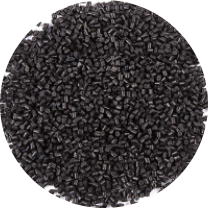

Carbon Black Masterbatch Manufacturers

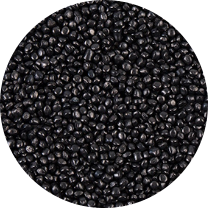
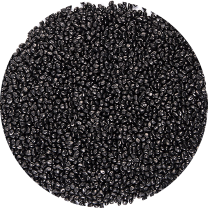
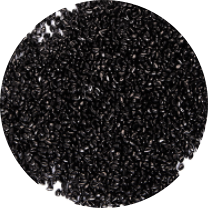
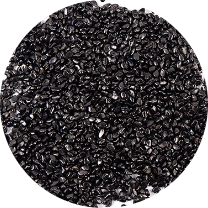
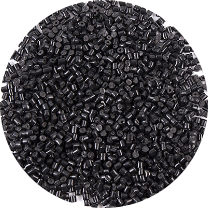
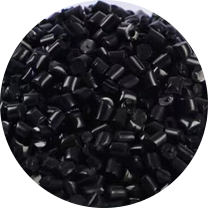
Black masterbatch is a kind of product with a high concentration of carbon black polyvinyl resin as the carrier, which is made by continuous compaction at low temperatures. Carbon black is prone to dust, which seriously pollutes the workshop environment, so it is selected to complete the pre-color dispersion of carbon black on different resin carriers. Suitable for resins, such as PE, PP, PS, ABS, EVA, PA, PVC, etc. With high blackness, dispersion, and wide applicability, it can be used in injection molding, extrusion, HDPE, LDPE, high-grade ultra-thin film-blowing film, and other processes. Its technical indicators include carbon black content between 45% and 50%.
The advantages of the black mother include improving the dispersion of the pigment in the product, helping to maintain the chemical stability of the pigment, ensuring the stability of the color of the product, protecting the health of the operator, keeping the environment clean, and easy to use. Widely used in the plastic processing industry, including injection molding, extrusion molding, blow molding, wire drawing, pipe, granulation molding, and other fields. The black masterbatch has weather resistance and durability and is suitable for many fields such as plastic products, building materials, and automotive parts. Through careful manufacturing and screening, we ensure that the product has a consistent high-quality standard, has color stability, and is not easy to fade or change color, so that the product remains attractive and appears in long-term use.
Product Category
Get in Touch With Us


Who Are We?
Changzhou Runyi New Material Technology Co., Ltd.
We are
China Carbon Black Masterbatch Manufacturers and
Custom Universal Black Masterbatch Suppliers.
Changzhou Runyi New Material Technology Co., Ltd. relying on the unique market and geographical advantages of the Yangtze River Delta, and through long-term unremitting efforts, has developed into a well-known color masterbatch production and sales enterprise that integrates research and development, production, sales, and export. Over the years, the company has cultivated a group of professional talents and has become the main force of the company, while accumulating rich production experience.
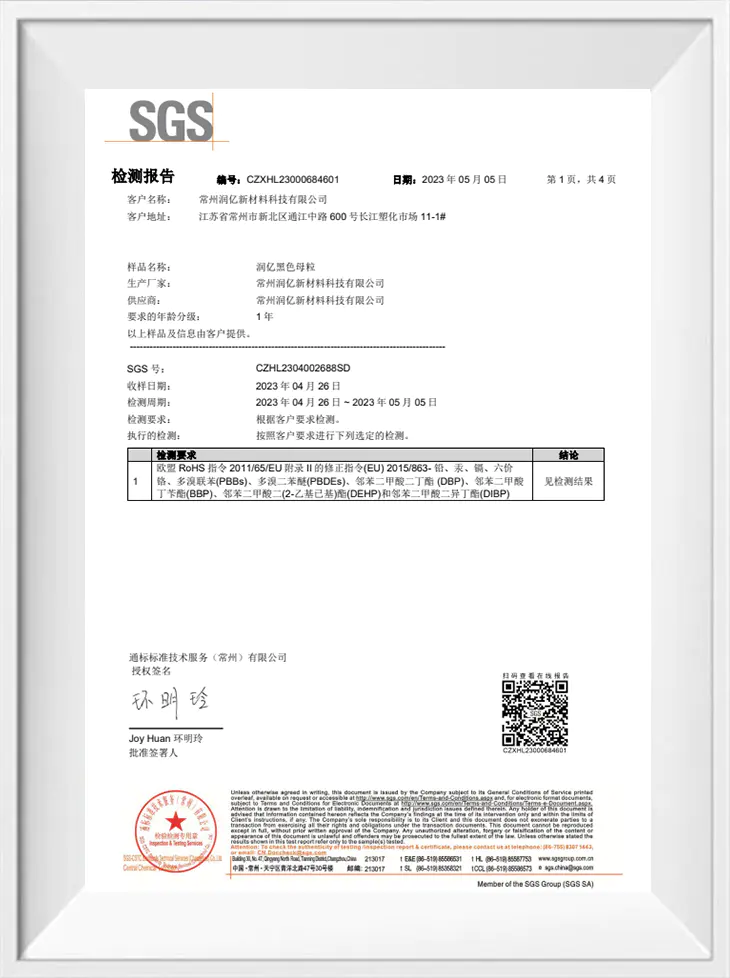
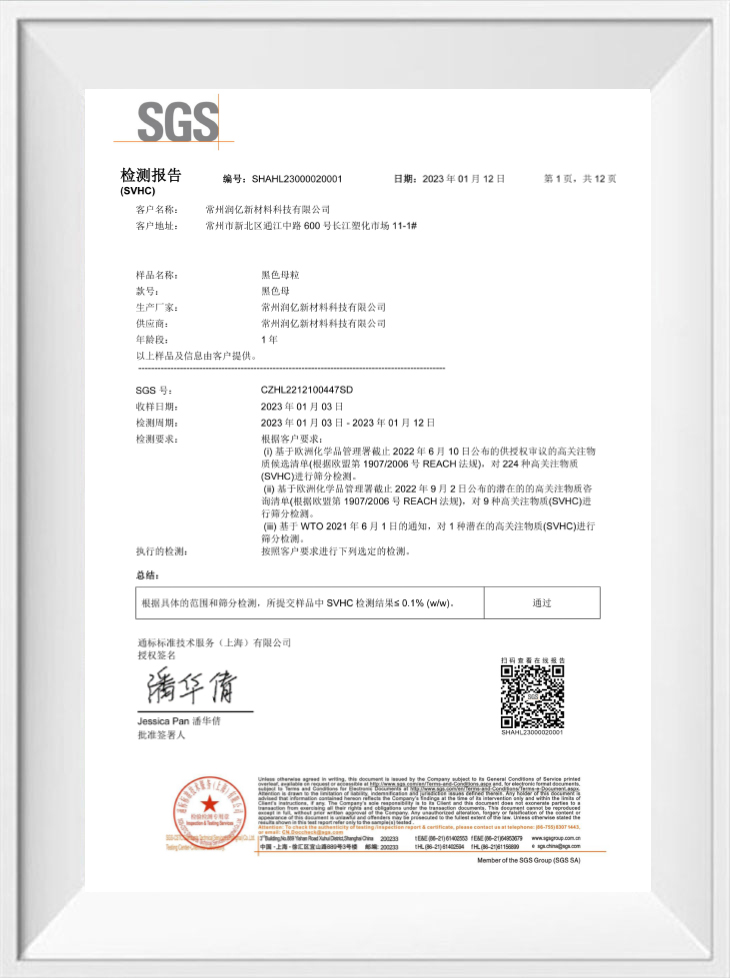
Popular products
The main products include various types of plastic film bags, such as takeout packaging bags, express bags, shopping bags, food composite bags, wrapping films, agricultural film, etc., and disposable dining utensils, such as lunch boxes, knives, forks, spoons, etc.
News
-
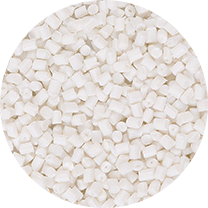
Why Injection White Masterbatch Is Widely Used in Moder...
Plastic manufacturers rarely add raw titanium dioxide powder to a mold anymore. Instead, injection white masterbatch delivers that same whitening power in a cl...
READ MORE -
How to Choose Injection White Masterbatch for Plastic I...
Technical Note Getting a consistent white across thousands of injection-molded parts is harder than it looks — raw pigment behaves differently batch to batch, ...
READ MORE -
How to Choose Carbon Black Masterbatch for Plastic Colo...
Choosing the right Carbon Black Masterbatch affects far more than the final color of a plastic part. The carbon black grade, its dispersion quality, and the c...
READ MORE -
Functional Masterbatch: Types, Benefits & Applications
Plastic manufacturers seeking consistent, scalable additive delivery have made functional masterbatch the industry-standard input across packaging, automotive,...
READ MORE
Black Masterbatch Industry Knowledge Extension
Carbon black masterbatch technology analysis: How to achieve high dispersibility and stable coloring?
Carbon black masterbatch (Carbon Black Masterbatch) is one of the most widely used coloring and functional additives in the plastics industry. Its core challenge is to solve the dispersion problem caused by the high specific surface area and easy agglomeration characteristics of carbon black, while ensuring color stability and functionality (such as conductivity, UV shielding). The following are the key technical points to achieve high dispersibility and stable coloring:
I. Key factors for the dispersibility of carbon black masterbatch
1. Selection of carbon black
Particle size and structure:
The smaller the particle size (such as 20-30nm), the stronger the coloring power, but the greater the difficulty of dispersion (easy to agglomerate).
High-structure carbon black (DBP oil absorption value>120ml/100g) is easier to form a conductive network, but requires stronger shear force to disperse.
Surface chemical modification:
Oxidation-treated carbon black (containing carboxyl/hydroxyl groups) can improve compatibility with polar carriers (such as PA, PET).
2. Matching of carrier resin
| Resin Type | Recommended Carbon Black Concentration | Characteristics |
|---|---|---|
| LDPE | 20-30% | Low processing temperature (160-200°C), excellent melt flow, suitable for general-purpose coloring masterbatch. |
| PP | 25-40% | Requires high shear force (220-250°C), ideal for high-concentration conductive masterbatch, excellent heat resistance. |
| HDPE | 20-35% | High rigidity, suitable for injection molding, but requires careful dispersion to avoid surface defects. |
| PS/ABS | 15-25% | Lower processing temperature (180-220°C), requires lubricants (e.g., EBS) to prevent degradation. |
| PA/PET | 15-30% | Requires surface-modified carbon black (oxidized), compatible with polar resins, used in engineering plastics. |
3. Dispersants and processing aids
Dispersants:
Low molecular weight polyethylene wax (PE Wax) and stearates (such as ZnSt) can reduce the adsorption between carbon black particles.
Superdispersants (such as BYK-2150) coat carbon black with anchoring groups to improve long-term stability.
Lubricants:
Ethylene bisstearamide (EBS) reduces melt viscosity and prevents screw slippage.
4. Processing technology optimization
Twin screw extrusion process:
High aspect ratio (L/D≥40) + combined screw elements (kneading blocks, reverse threads) enhance shear dispersion.
Temperature zoning control (such as PP-based masterbatch: 180-220℃).
Masterbatch dilution ratio:
Generally, 1%~5% addition is recommended, and conductive masterbatch needs to be higher (10%~20%).
2. Key control points for stable coloring
1. Color consistency
Carbon black concentration and L*a*b* value: Use a spectrophotometer to monitor the blackness (L* value <15 is a high-quality dark black).
Avoid yellowing of the carrier resin: Choose low-volatile PP or add antioxidants (such as Irganox 1010).
2. Adaptability to application scenarios
Outdoor weather resistance: Carbon black itself has UV absorption ability, but it needs to be matched with light stabilizers (such as hindered amine HALS).
Food contact compliance: Carbon black models that comply with FDA 21 CFR 178.3297 or EU 10/2011 (such as Cabot Monarch 880).
3. Common Problems and Solutions
| Issue | Root Cause | Solution |
|---|---|---|
| Gritty surface on masterbatch | Poor carbon black dispersion | Increase shear temperature in screw zones or add more dispersing agent (e.g., PE wax). |
| Grayish tint in final products | Insufficient carbon black concentration or resin degradation | Check masterbatch dilution ratio and processing temperature limits. |
| Unstable conductivity | Carbon black structure damage or uneven distribution | Optimize screw configuration to avoid excessive shear; use high-structure carbon black. |
| Color bleeding/migration | Low molecular weight carriers or excessive plasticizers | Switch to higher-MW resins (e.g., HDPE instead of LDPE) or reduce plasticizer content. |
| Reduced mechanical strength | Overloading of carbon black (>40%) disrupting polymer matrix | Balance carbon black content with reinforcing additives (e.g., glass fibers for PA). |
If you are interested in our products, please consult us
CONTACT DETAILS
- Address : 11-1, No. 600 Tongjiang Middle Road, Xinbei District, Changzhou City, Jiangsu Province
- Fax : 0086-13775276672
- Tel: 0086-13401333666
- Email: [email protected]
QUICK LINK
NEWS CENTER
MOBILE TERMINAL
Copyright © Changzhou Runyi New Material Technology Co., Ltd. All Rights Reserved.
Custom Universal Black Masterbatch Suppliers


 CONTACT US