

 English
 中文简体
中文简体 한국어
한국어 عربى
عربى

NEWS
Home / News / Industry News / Optimizing Carrier Resin Compatibility for 50% Concentration Carbon Black Master Batch


Optimizing Carrier Resin Compatibility for 50% Concentration Carbon Black Master Batch
Article Directory
- 1 The Fundamental Importance of Carrier Resin Selection
- 2 Melt Flow Index (MFI) and Rheological Dynamics
- 3 Compatibility in Specialized Applications: Melt Blown and Electrets
- 4 Environmental Protection and Production Innovation
- 5 Conclusion
- 6 Frequently Asked Questions (FAQ)
- 6.1 1. Why is 50% the standard "high" concentration for carbon black master batch?
- 6.2 2. How to improve dispersion in carbon black masterbatch during production?
- 6.3 3. Can I use a carbon black master batch with a PE carrier in PP products?
- 6.4 4. What is the carbon black master batch shelf life and storage requirement?
- 6.5 5. What are the uses of black masterbatch in melt blown fabric?
- 7 Related Industry References
In the field of polymer compounding, achieving a high-loading, high-dispersion carbon black master batch is a significant technical milestone. A 50% concentration level represents a critical threshold where the rheological behavior of the melt is heavily influenced by the pigment-to-binder ratio. Selecting the appropriate carrier resin is not merely a matter of cost, but a complex decision involving Melt Flow Index (MFI) matching, surface tension, and terminal application requirements. At Changzhou Runyi New Material Technology Co., Ltd., located in the heart of the Yangtze River Delta, we leverage our advanced R&D capabilities and specialized production lines to engineer masterbatches that meet international standards for quality and environmental protection.
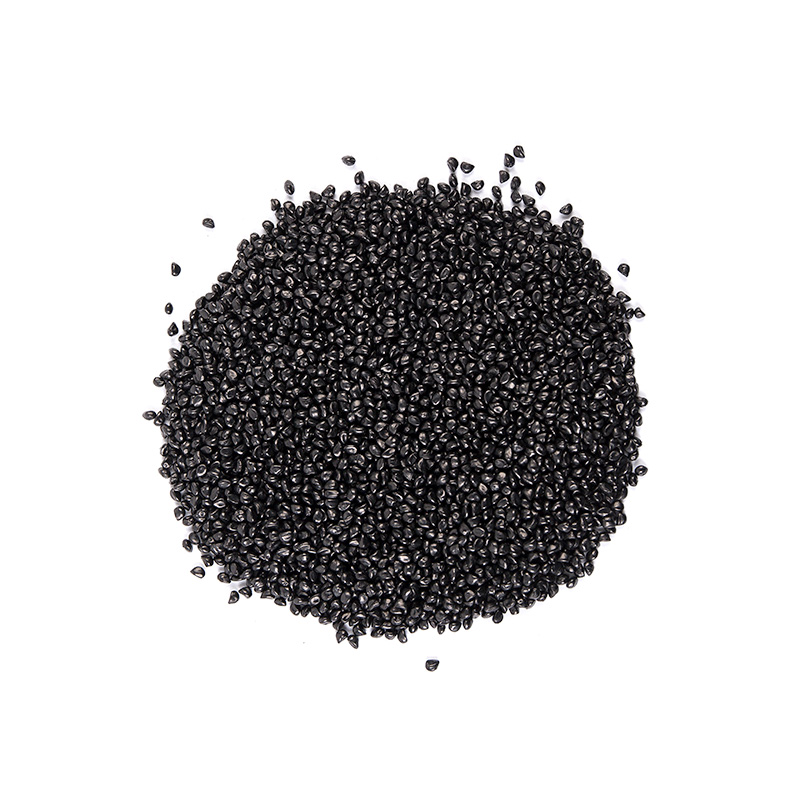
The Fundamental Importance of Carrier Resin Selection
The carrier resin serves as the vehicle that transports the pigment and ensures its uniform distribution within the final plastic matrix. When formulating a carbon black master batch at a 50% loading, the carrier must possess a lower molecular weight or higher MFI than the target base resin to facilitate wet-out of the carbon black particles. Understanding how to choose carrier resin for masterbatch involves evaluating the chemical affinity between the carrier and the final product resin to prevent delamination or mechanical failure.
Comparison: High-Density Polyethylene (HDPE) vs. Linear Low-Density Polyethylene (LLDPE)
While HDPE provides higher thermal stability, LLDPE is often preferred for 50% concentrations due to its superior flexibility and ability to accept high pigment loadings without becoming overly brittle. HDPE offers greater stiffness but can lead to dispersion challenges at high concentrations, whereas LLDPE facilitates a more robust masterbatch structure.
| Property | HDPE Carrier | LLDPE Carrier |
| Pigment Loading Capacity | Moderate (Risk of brittleness) | High (Excellent "wetting" ability) |
| Dispersion Quality | Requires high shear forces | Superior flow around particles |
| End-use Compatibility | Best for rigid PE parts | Universal for most PE applications |
Melt Flow Index (MFI) and Rheological Dynamics
For a 50% carbon black master batch, the MFI of the carrier resin must be significantly higher than that of the base polymer. This mismatch is intentional; as the carbon black concentration increases, the viscosity of the compound rises exponentially. Engineers often ask, what is the best MFI for carbon black masterbatch carrier? Generally, a carrier MFI ranging from 20 to 50 g/10min is required to ensure that the final 50% concentrate remains processable in standard injection molding or extrusion equipment.
Technical Advantages of MFI Optimization
- Shear Thinning: High MFI carriers allow for better shear thinning during the carbon black master batch production process, breaking down pigment agglomerates.
- Reduced Energy Consumption: Lower melt viscosity reduces the torque required by the extruder, aligning with the energy conservation goals at Changzhou Runyi New Material Technology Co., Ltd..
- Surface Finish: Optimized rheology prevents "shark skin" and other surface defects on the final extruded product.
Compatibility in Specialized Applications: Melt Blown and Electrets
Specialized applications require even more precise carrier matching. Since 2020, Changzhou Runyi New Material Technology Co., Ltd. has focused on melt blown fabric black masterbatch and electret technologies. In these scenarios, the carrier must have exceptional purity to avoid clogging the micro-diameter spinnerets used in melt-blown production. The benefits of using LLDPE in carbon black masterbatch for these high-tech fabrics include improved elongation and consistent fiber diameter.
Carrier Compatibility: Polypropylene (PP) vs. Polyethylene (PE)
PP carriers are essential for melt-blown fabrics to ensure total compatibility with the base material, whereas PE carriers are the standard for film and pipe applications. Using a PE-based carbon black master batch in a PP melt-blown line can cause "shots" or weak points in the fabric due to phase separation.
| Application | Recommended Carrier | Reason for Selection |
| Melt Blown Fabric | High MFI Polypropylene (PP) | Zero phase separation; high fiber integrity. |
| Agricultural Film | LLDPE / LDPE Blend | Excellent puncture resistance and UV shielding. |
| Pressure Pipes | HDPE / MDPE | Resistance to environmental stress cracking (ESCR). |
Environmental Protection and Production Innovation
As a high-tech enterprise, we emphasize carbon black master batch environmental impact by maximizing consumption reduction. Our production lines are designed to minimize dust emissions and utilize energy-efficient cooling systems. By selecting carriers that process at lower temperatures, we reduce the thermal history of the polymer, ensuring that the carbon black master batch maintains its physical properties through multiple heat cycles.
Key Innovation Pillars at Runyi:
- Advanced Filtration: Utilizing multi-stage melt filtration to ensure our 50% concentration products are free from impurities.
- International Standards: Every batch is tested against global benchmarks for color strength and dispersion.
- Custom Formulations: Developing water electret masterbatch and fluorocarbon polymer electret masterbatch for specialized filtration media.
Conclusion
Selecting the best carrier resin for a 50% carbon black master batch requires a deep understanding of the intended application. While LLDPE offers the most versatile compatibility for general PE applications, high MFI PP is non-negotiable for specialized melt-blown fabrics. Changzhou Runyi New Material Technology Co., Ltd. remains committed to technological innovation and excellence, providing the industry with high-concentration masterbatches that balance performance, cost, and environmental responsibility.
Frequently Asked Questions (FAQ)
1. Why is 50% the standard "high" concentration for carbon black master batch?
50% is a balanced threshold that provides high opacity and cost-effectiveness while still allowing enough carrier resin to coat each carbon black particle, ensuring proper dispersion during let-down.
2. How to improve dispersion in carbon black masterbatch during production?
Dispersion is improved by selecting a carrier with an appropriate MFI and using twin-screw extrusion with high shear zones. The addition of specific dispersants or waxes also helps reduce pigment agglomeration.
3. Can I use a carbon black master batch with a PE carrier in PP products?
Generally, it is not recommended for high-performance parts. While small amounts may be tolerated, it can lead to reduced mechanical strength and surface peeling due to the immiscibility of PE and PP.
4. What is the carbon black master batch shelf life and storage requirement?
When stored in a cool, dry environment in its original packaging, the shelf life is typically up to 12 months. Moisture absorption should be avoided, as it can cause "silver streaks" during processing.
5. What are the uses of black masterbatch in melt blown fabric?
In addition to providing color, it can improve UV resistance and, when combined with our electret masterbatches, help maintain the electrostatic charge necessary for high-efficiency filtration.
Related Industry References
- ISO 18451-1: Pigments, dyestuffs and extenders — Terminology and general test methods.
- ASTM D1238: Standard Test Method for Melt Flow Rates of Thermoplastics by Extrusion Plastometer.
- Society of Plastics Engineers (SPE) - Compounding and Dispersion Technical Guidelines.
- Plastics Technology - "Understanding Carrier Resin Dynamics in Masterbatch Formulation."
prevNo previous article
nextWhy is UV Resistance Critical When Selecting a Carbon Black Master Batch for Outdoor Plastic Applications?

Popular products
The main products include various types of plastic film bags, such as takeout packaging bags, express bags, shopping bags, food composite bags, wrapping films, agricultural film, etc., and disposable dining utensils, such as lunch boxes, knives, forks, spoons, etc.
If you are interested in our products, please consult us
CONTACT DETAILS
- Address : 11-1, No. 600 Tongjiang Middle Road, Xinbei District, Changzhou City, Jiangsu Province
- Whatsapp : 0086-13775276672
- Tel: 0086-13401333666
- Email: [email protected]
QUICK LINK
NEWS CENTER
MOBILE TERMINAL
Copyright © Changzhou Runyi New Material Technology Co., Ltd. All Rights Reserved.
Custom China Antibacterial Masterbatch


 CONTACT US