

 English
 中文简体
中文简体 한국어
한국어 عربى
عربى

NEWS
Home / News / Industry News / Why is UV Resistance Critical When Selecting a Carbon Black Master Batch for Outdoor Plastic Applications?


Why is UV Resistance Critical When Selecting a Carbon Black Master Batch for Outdoor Plastic Applications?
Article Directory
- 1 The Science of Photo-Oxidation and UV Absorption
- 2 Key Factors Influencing UV Shielding Performance
- 3 Optimizing the Masterbatch for Specialized Applications
- 4 Long-Term Maintenance and Cost Efficiency
- 5 Frequently Asked Questions (FAQ)
- 5.0.1 1. How much carbon black is needed for effective UV protection?
- 5.0.2 2. Does carbon black master batch affect the mechanical properties of plastic?
- 5.0.3 3. Can I use carbon black master batch in food-contact packaging?
- 5.0.4 4. What is the difference between carbon black and UV stabilizers?
- 5.0.5 5. Why is my black plastic turning grey or chalky outdoors?
- 6 Industry References
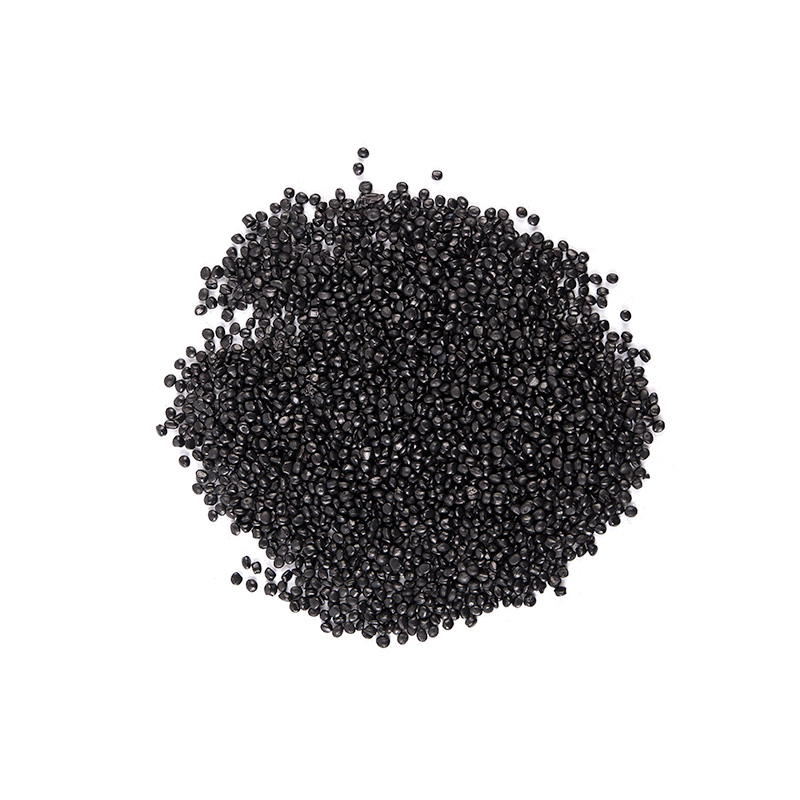
For engineers and manufacturers in the polymer industry, the longevity of outdoor plastic products is a primary benchmark of quality. Whether it is agricultural film, geometric membranes, or automotive components, exposure to solar radiation triggers photo-oxidation, leading to mechanical failure and aesthetic degradation. Choosing a high-performance carbon black master batch is the most effective strategy to mitigate these effects. Changzhou Runyi New Material Technology Co., Ltd., a leading R&D and production enterprise in the Yangtze River Delta, specializes in international-standard masterbatch solutions that prioritize environmental protection and technological excellence.
The Science of Photo-Oxidation and UV Absorption
Ultraviolet (UV) radiation carries sufficient energy to break the chemical bonds of most polymers, such as Polyethylene (PE) and Polypropylene (PP). One must ask: how does carbon black master batch prevent UV degradation in polymers? Carbon black acts as both a physical barrier and a chemical stabilizer. It absorbs harmful UV rays and converts them into heat, which is then dissipated safely through the polymer matrix. This prevents the initiation of free radical chains that cause brittleness.
While standard pigments only provide color, a specialized carbon black master batch provides a comprehensive shielding effect. Below is a comparison of stabilization methods.
| Stabilization Method | Mechanism | Efficiency for Outdoor Use |
| Organic UV Absorbers | Chemical absorption of specific wavelengths | Moderate (Can leach or migrate over time) |
| HALS (Hindered Amine Light Stabilizers) | Scavenging free radicals | High (Often used in synergy with carbon black) |
| Carbon Black Master Batch | Physical screening and broad-spectrum absorption | Superior (Cost-effective and permanent) |
Key Factors Influencing UV Shielding Performance
Not all masterbatches are created equal. When evaluating what is the ideal carbon black content for outdoor UV protection, the particle size and the "loading" percentage are critical. Smaller particle sizes (typically 20-25nm) provide a larger surface area for UV absorption, significantly increasing the protective capacity of the final plastic product.
Dispersion and its Impact on Longevity
A frequent technical challenge for engineers is how to improve carbon black master batch dispersion in HDPE. Poorly dispersed masterbatch creates "hotspots" where UV rays can penetrate the polymer gaps, leading to localized cracking and failure. Changzhou Runyi New Material Technology Co., Ltd. utilizes advanced production lines and international testing standards to ensure that our carbon black particles are uniformly distributed throughout the carrier resin.
The difference between high-dispersion and low-dispersion masterbatch is illustrated in the table below:
| Performance Metric | High-Dispersion Masterbatch | Low-Dispersion Masterbatch |
| Surface Finish | Smooth, high-gloss, and consistent | Rough, matte, or visible agglomerates |
| Mechanical Strength | Maintains high tensile and impact strength | Prone to stress cracking at agglomerate sites |
| UV Lifetime | Extended (Up to 10+ years in optimized loads) | Shortened; inconsistent protection layers |
Optimizing the Masterbatch for Specialized Applications
In the evolving market of technical textiles and filtration, why is carbon black master batch used in melt blown fabric production? Beyond simple UV protection, black masterbatch in melt-blown applications must meet strict filtration and electret requirements. Since 2020, Changzhou Runyi New Material Technology Co., Ltd. has established a dedicated R&D team for melt-blown fabric projects, integrating water electret and fluorocarbon polymer technologies to maximize energy conservation and filtration efficiency.
Selecting the Right Carrier Resin
Another common question is how to choose the right carrier resin for carbon black master batch. The carrier must have a slightly higher melt flow index (MFI) than the base resin to ensure total encapsulation of the carbon black during the extrusion process. Using an incompatible carrier can lead to delamination and reduced UV stability.
- Carrier Compatibility: Ensure the carrier matches the base polymer (e.g., PE carrier for PE products).
- Pigment Loading: High-loading (40-50%) masterbatches are efficient for thinning down during production.
- Environmental Safety: Our products focus on consumption reduction and environmental protection.
Long-Term Maintenance and Cost Efficiency
Understanding what are the storage requirements for carbon black master batch is essential to maintaining its UV-protective properties. Although carbon black is stable, the carrier resin can absorb moisture, leading to "lensing" effects during molding that weaken the UV shield. Furthermore, many ask why is carbon black master batch more cost-effective than liquid colorants. Masterbatch pellets are easier to dose accurately, reduce waste, and provide a more stable UV barrier throughout the production run.
Frequently Asked Questions (FAQ)
1. How much carbon black is needed for effective UV protection?
Generally, a final concentration of 2% to 2.5% of high-quality carbon black in the end product is required to achieve a high level of UV stabilization for long-term outdoor use.
2. Does carbon black master batch affect the mechanical properties of plastic?
If the dispersion is high, it can actually improve the stiffness of the product. However, poor dispersion acts as a contaminant that reduces impact resistance. This is why selecting a professional manufacturer like Changzhou Runyi New Material Technology Co., Ltd. is vital.
3. Can I use carbon black master batch in food-contact packaging?
Yes, provided the carbon black used meets specific international food-grade standards (such as FDA or EU regulations) regarding purity and polycyclic aromatic hydrocarbon (PAH) content.
4. What is the difference between carbon black and UV stabilizers?
Carbon black acts as a physical screen that absorbs UV across the entire spectrum, while chemical UV stabilizers (like HALS) work by neutralizing the chemical radicals produced by UV exposure. For best results, they are often used together.
5. Why is my black plastic turning grey or chalky outdoors?
This is known as "chalking." It occurs when the polymer surface degrades, exposing the pigment. Using a carbon black master batch with smaller particle sizes and better UV absorption can delay this process significantly.
Industry References
- ISO 4892-2: Methods of exposure to laboratory light sources (Xenon-arc lamps) for plastics.
- ASTM D1603: Standard Test Method for Carbon Black Content in Olefin Plastics.
- "Plastic Additives Handbook" by Hans Zweifel – Technical analysis of UV stabilizers.
- Internal Research & Development Reports - Changzhou Runyi New Material Technology Co., Ltd.
prevNo previous article
nextWhat are the Benefits of Using High-Dispersion Plastic Black Masterbatch for Thin-Film and Packaging Applications?

Popular products
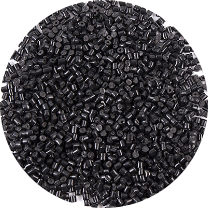
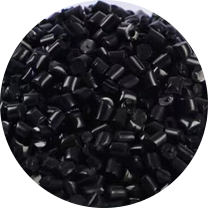
The main products include various types of plastic film bags, such as takeout packaging bags, express bags, shopping bags, food composite bags, wrapping films, agricultural film, etc., and disposable dining utensils, such as lunch boxes, knives, forks, spoons, etc.
If you are interested in our products, please consult us
CONTACT DETAILS
- Address : 11-1, No. 600 Tongjiang Middle Road, Xinbei District, Changzhou City, Jiangsu Province
- Whatsapp : 0086-13775276672
- Tel: 0086-13401333666
- Email: [email protected]
QUICK LINK
NEWS CENTER
MOBILE TERMINAL
Copyright © Changzhou Runyi New Material Technology Co., Ltd. All Rights Reserved.
Custom China Antibacterial Masterbatch


 CONTACT US