

 English
 中文简体
中文简体 한국어
한국어 عربى
عربى

NEWS
Home / News / Industry News / Precision Pigmentation: Mastering the FPV and Dispersion of Carbon Black Masterbatch


Precision Pigmentation: Mastering the FPV and Dispersion of Carbon Black Masterbatch
Article Directory
- 1 Technical Imperative: The Role of Carbon Black Masterbatch Filter Pressure Value (FPV)
- 2 Achieving Flawless Surfaces: Carbon Black Masterbatch for Thin Film Applications
- 3 Operational Continuity: Preventing Screen Pack Blockage in Masterbatch Processing
- 4 Summary of Technical Specification for B2B Procurement
- 5 Frequently Asked Questions (FAQ)
- 5.1 1. What is the definition of Filter Pressure Value (FPV)?
- 5.2 2. Why is a low FPV crucial for Carbon Black Masterbatch for thin film applications?
- 5.3 3. How does dispersion analysis relate to FPV?
- 5.4 4. What causes screen pack blockage and how can it be avoided?
- 5.5 5. How does a High-jetness Carbon Black Masterbatch for film achieve its deep color?
For processors involved in manufacturing thin-gauge films, fine fibers, or sophisticated injection molded components, the performance of the Carbon Black Masterbatch is defined by its dispersion quality and its rheological behavior. Failure to meet stringent quality metrics, particularly Filter Pressure Value (FPV), results directly in costly production downtime, screen pack replacement, and compromised final product integrity.
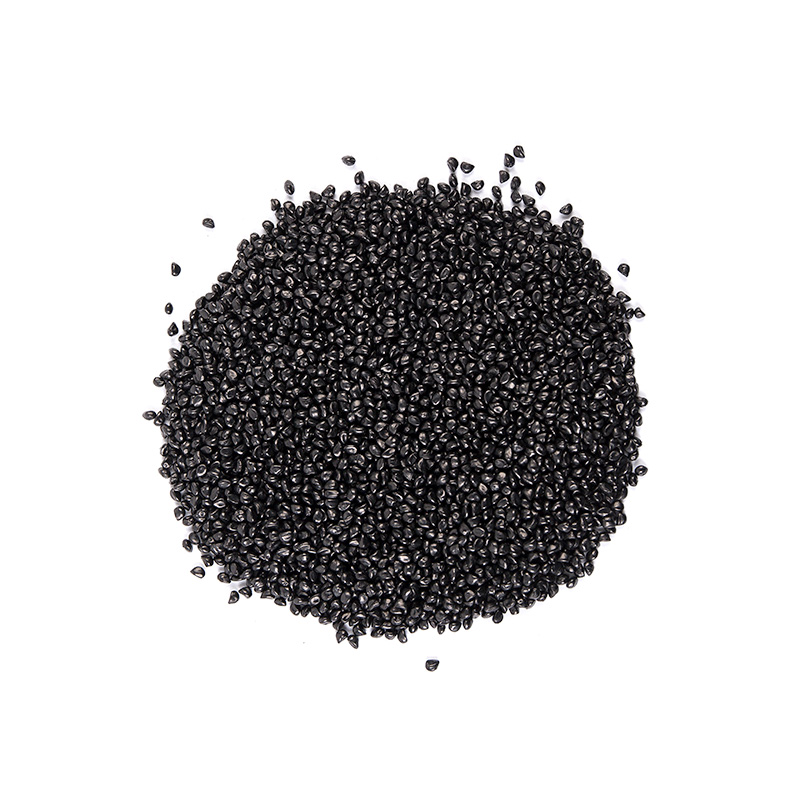
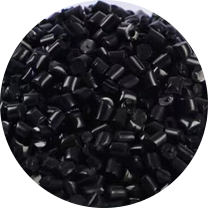
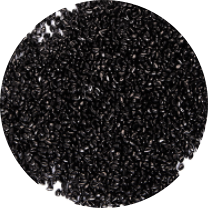
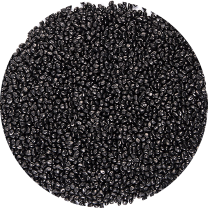
PP HYGIENIC/FOOD GRADE EVA/ABS/PET PLASTIC PELLETS BLACK MASTERBATCH
Technical Imperative: The Role of Carbon Black Masterbatch Filter Pressure Value (FPV)
The Filter Pressure Value (FPV) is arguably the most critical metric for evaluating the suitability of a masterbatch for applications involving narrow melt flow channels. It quantifies the level of non-dispersed agglomerates—the primary cause of processing issues.
FPV Measurement and Interpretation (Screen Pack Clogging)
- **Testing Protocol:** FPV is measured by extruding the masterbatch through a fine-mesh filter screen (typically 400 mesh or 500 mesh) at a controlled temperature and throughput. The rate of pressure increase over time determines the FPV.
- **Interpretation:** A rapidly increasing pressure indicates a high concentration of large, non-dispersed carbon black agglomerates that are captured by the screen. A low, stable FPV is essential for continuous production and is the benchmark for high-quality **Carbon Black Masterbatch**.
FPV Requirements for Critical Applications (Film vs. Fiber)
The required Carbon Black Masterbatch filter pressure value (FPV) is application-dependent, scaling inversely with the thickness and melt channel diameter of the final product. Fiber and thin film extrusion demand exponentially better filtration performance than standard thick-wall injection molding.
FPV Requirements Comparison Table
| Application Type | Target Film/Fiber Thickness | Required FPV Performance (Relative) | Maximum Recommended FPV Limit |
|---|---|---|---|
| Thick Injection Molding | >1 mm | Low Sensitivity | High (Relaxed specification) |
| Standard Blow Molding | 200 $\mu m$ - 500 $\mu m$ | Moderate Sensitivity | Medium |
| Thin Film/Fiber Extrusion | < 50 $\mu m$ (Fiber: < 100 denier) | Extreme Sensitivity | Very Low (Strict specification) |
Achieving Flawless Surfaces: Carbon Black Masterbatch for Thin Film Applications
The success of Carbon Black Masterbatch for thin film applications is judged by the complete absence of visual and functional defects. Pinholes, streaks, and undissolved particles are direct indicators of poor dispersion and high FPV, making advanced dispersion analysis mandatory.
The Necessity of Superior Dispersion Analysis of Carbon Black Masterbatch
Visual inspection alone is insufficient. Technical verification of **Carbon Black Masterbatch** quality requires sophisticated methods such as Melt Flow Rate analysis and microtome sectioning followed by microscopy. This rigorous Dispersion analysis of Carbon Black Masterbatch assesses the size and quantity of non-dispersed carbon black clusters.
- **Dispersion Rating:** Utilizing a grading system (e.g., ISO 18553), where grade 1 is excellent and grade 5 is poor, processors should specify a grade of 1.0 to 1.5 for all film and fiber applications.
- **Effect of Pigment Grade:** Highly structured carbon blacks are more difficult to disperse but offer superior UV protection and jetness. They require specialized compounding equipment (e.g., co-rotating twin-screw extruders) to fully wet out and de-agglomerate.
Agglomerate Size and Surface Defects (Pinholes)
In thin film, agglomerates larger than the film thickness act as stress concentrators and thermal weak spots, leading to pinholes and dielectric failures. The acceptable maximum particle size must be significantly lower than the final film thickness (e.g., a maximum agglomerate size of 5 $\mu m$ for a 20 $\mu m$ film).
Masterbatch Dispersion Grades Comparison Table
| Dispersion Grade (ISO 18553) | Agglomerate Size (Relative) | Resulting Film/Fiber Quality |
|---|---|---|
| 1.0 - 1.5 | Near Perfect (Sub-micron) | Excellent: Suitable for ultra-thin film and synthetic fiber. |
| 2.0 - 2.5 | Minor Agglomerates | Good: Suitable for standard injection and blow molding. |
| 3.0+ | Visible Clusters | Poor: Unsuitable for precision applications; high FPV risk. |
Operational Continuity: Preventing Screen Pack Blockage in Masterbatch Processing
Sustained production relies on engineering the masterbatch to minimize filter maintenance. Preventing screen pack blockage in masterbatch involves controlling both the raw material quality and the compounding process.
The Role of Carrier Resin and Viscosity
- **Carrier Selection:** The carrier polymer must be carefully matched to the base resin and should have a lower or equivalent melt viscosity. A mismatched, high-viscosity carrier will not fully disperse, leading to increased shear stress and potential blockage.
- **Moisture Control:** Residual moisture in the carrier resin or carbon black can flash to steam during processing, causing air voids (blisters) and disrupting the melt flow, exacerbating FPV issues.
High-Quality Pigment Selection for High-jetness Carbon Black Masterbatch for film
To achieve the deep black color required for UV protection and aesthetics, **High-jetness Carbon Black Masterbatch for film** utilizes fine particle size carbon black. While fine particles offer maximum jetness and UV protection, they are inherently more challenging to disperse. High-quality manufacturers overcome this by employing specialized wetting agents and dispersing aids (e.g., functionalized polymers) to ensure every particle is properly encapsulated.
Summary of Technical Specification for B2B Procurement
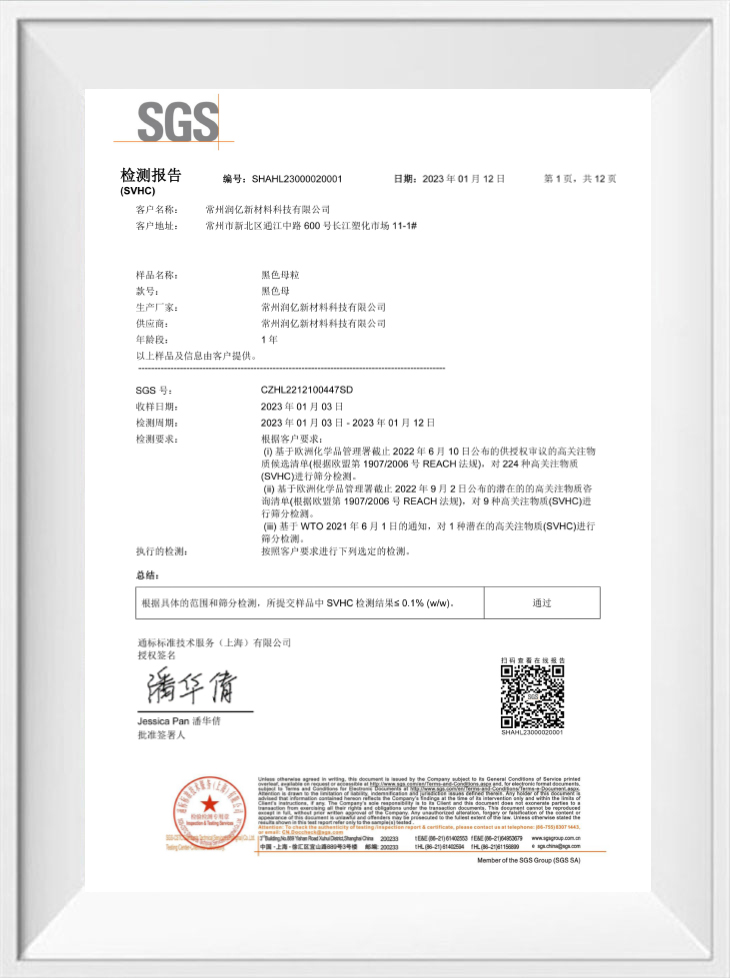
For B2B procurement, demanding a technical data sheet that explicitly details the FPV (measured at the required concentration), the ISO 18553 dispersion grade, and the recommended let-down ratio is essential for validating a quality **Carbon Black Masterbatch** supplier.
Frequently Asked Questions (FAQ)
1. What is the definition of Filter Pressure Value (FPV)?
FPV is a quantitative measure of the purity and dispersion quality of a masterbatch, defined by the rate of pressure increase observed when the melted material is forced through a fine-mesh filter screen.
2. Why is a low FPV crucial for Carbon Black Masterbatch for thin film applications?
A low FPV indicates minimal non-dispersed carbon black agglomerates. These agglomerates would cause immediate defects, such as pinholes, film breakage, or surface imperfections, which is critical for **Carbon Black Masterbatch for thin film applications**.
3. How does dispersion analysis relate to FPV?
Dispersion analysis (e.g., microscopy or grading) is the qualitative measure of particle uniformity, whereas FPV is the quantitative, production-scale measure. Both are necessary to ensure the high-quality Dispersion analysis of Carbon Black Masterbatch required for manufacturing.
4. What causes screen pack blockage and how can it be avoided?
Screen pack blockage is primarily caused by large, poorly dispersed agglomerates or non-melted foreign particles. It is avoided by ensuring a low FPV product and utilizing a high-quality carrier resin with excellent compatibility, thus Preventing screen pack blockage in masterbatch operations.
5. How does a High-jetness Carbon Black Masterbatch for film achieve its deep color?
High jetness is achieved by using fine particle size carbon black with high surface area. To fully realize this jetness without processing issues, the masterbatch requires specialized compounding techniques to fully de-agglomerate and wet out the pigment.
prevNo previous article
nextMFR Matching Principle: Optimizing White Masterbatch and Polymer Matrix Compatibility

Popular products
The main products include various types of plastic film bags, such as takeout packaging bags, express bags, shopping bags, food composite bags, wrapping films, agricultural film, etc., and disposable dining utensils, such as lunch boxes, knives, forks, spoons, etc.
If you are interested in our products, please consult us
CONTACT DETAILS
- Address : 11-1, No. 600 Tongjiang Middle Road, Xinbei District, Changzhou City, Jiangsu Province
- Whatsapp : 0086-13775276672
- Tel: 0086-13401333666
- Email: [email protected]
QUICK LINK
NEWS CENTER
MOBILE TERMINAL
Copyright © Changzhou Runyi New Material Technology Co., Ltd. All Rights Reserved.
Custom China Antibacterial Masterbatch


 CONTACT US