

 English
 中文简体
中文简体 한국어
한국어 عربى
عربى

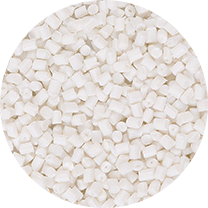

Carbon Black Masterbatch: Uses, Grades & Dosage Guide
Article Directory
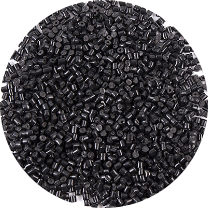
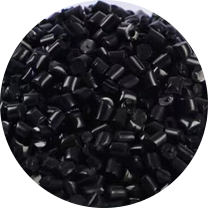
Carbon black masterbatch is a concentrated mixture of carbon black pigment dispersed in a carrier resin, designed to color and protect plastic products at scale. Used across packaging, automotive, agriculture, and wire and cable industries, it is the most efficient and cleanest way to introduce carbon black into any thermoplastic process.
20–40% Typical carbon black loading in masterbatch
2–5% Standard let-down ratio in final compound
50+ years UV-protected service life in pipe applications
N220–N990 ASTM grade range used in masterbatch
What Is Carbon Black Masterbatch?
Carbon black masterbatch is a solid, pelletized colorant concentrate produced by melt-mixing raw carbon black powder with a thermoplastic carrier — typically polyethylene (PE), polypropylene (PP), or a universal carrier. The carbon black content in a finished masterbatch pellet typically runs between 20% and 50% by weight, depending on the application and the required let-down ratio.
Technical Definition
A masterbatch is a solid or liquid additive for plastics. Carbon black masterbatch specifically packages carbon black at high concentration into a carrier resin, enabling safe, dust-free, and precisely metered addition to a base polymer during extrusion or injection molding.
Because raw carbon black is a fine, dusty powder that is difficult to handle and disperse uniformly, the masterbatch format solves three problems simultaneously: it eliminates dust exposure in the plant, ensures consistent pigment dispersion, and allows straightforward dosing through standard gravimetric or volumetric feeders.
Why Add Carbon Black to Plastics?
Carbon black serves four distinct technical functions in polymer systems, and carbon black masterbatch delivers all four without process disruption.
01
UV Stabilization
Carbon black absorbs UV radiation across the full solar spectrum and converts it to heat, preventing photo-oxidative chain scission. As little as 2–2.5% carbon black in HDPE pipe or geomembrane film delivers decades of outdoor service life — no separate UV stabilizer package needed at that loading level.
02
Jet-Black Coloration
Carbon black provides the deepest, most neutral black achievable in plastics. A jetness value (My) above 250 is typical for high-structure furnace blacks, producing the blue-black optical effect demanded in automotive trim, consumer electronics, and premium packaging.
03
Electrical Conductivity
Conductive-grade carbon blacks (e.g., Ketjenblack or N472) form continuous conductive networks inside the polymer matrix at loadings as low as 5–10%. This is essential for antistatic films, semiconductor cable shielding, and ESD-safe packaging trays.
04
Mechanical Reinforcement
In rubber and certain thermoplastic elastomers, carbon black particles bond covalently with the polymer chains during mixing, increasing tensile strength, abrasion resistance, and tear strength — the same principle that gives tire sidewalls their durability.
How Much Carbon Black Masterbatch Should You Use?
The correct dosage of carbon black masterbatch depends on the masterbatch concentration, the target carbon black level in the final part, and the base resin. The calculation is straightforward:
Masterbatch % = (Target CB% in final part) / (CB% in masterbatch) x 100
For example, if your masterbatch contains 40% carbon black and the specification for your pipe requires 2.5% carbon black in the final compound, you add 6.25% masterbatch by weight. The table below shows standard dosage ranges for common applications:
| Application | Target CB in Final Part | Typical Masterbatch Dose (40% MB) |
| HDPE pressure pipe (UV) | 2.0 – 2.5% | 5 – 6.25% |
| Agricultural film | 2.0 – 3.0% | 5 – 7.5% |
| Geomembrane liner | 2.0 – 2.5% | 5 – 6.25% |
| Injection-molded parts (color) | 1.0 – 2.0% | 2.5 – 5% |
| Conductive film/sheet | 5 – 15% | 12.5 – 37.5% |
| Cable insulation/jacketing | 2.0 – 3.0% | 5 – 7.5% |
Over-dosing wastes material and can impair elongation, impact strength, or surface finish. Under-dosing in UV-protection applications will lead to premature embrittlement. Always verify final carbon black content by ASTM D1603 (thermogravimetric ash test) before committing to full production runs.
Which Carbon Black Grade Works Best?
Not all carbon blacks perform the same function. The ASTM N-series grade system classifies furnace blacks by particle size and structure, and each grade is optimized for a specific end use. Selecting the correct grade is critical to the performance of your carbon black masterbatch.
For UV Protection
- N330, N550, N660 — medium particle size (20–65 nm), excellent UV absorption efficiency, easy dispersion in polyolefins
- Recommended for: pipe, film, geomembrane, cable jacket
- Particle size: 26–65 nm
- Surface area: 25–80 m2/g
For Jet-Black Color
- N110, N220 — fine particle, high surface area, delivers superior jetness and blue undertone
- Recommended for: automotive trim, electronics housing, premium packaging
- Particle size: 11–22 nm
- Surface area: 100–140 m2/g
For Conductivity
- N472, Ketjenblack EC-300J/600JD — very high structure, forms conductive network at low loading
- Recommended for: ESD packaging, semiconductor cable, antistatic film
- Structure (DBP): 180–480 mL/100g
- Percolation threshold: 5–12%
When compatibility matters, always confirm that the masterbatch carrier resin matches or is compatible with your base polymer. A PE carrier works cleanly in HDPE and LLDPE applications; for PP, request a PP-carrier masterbatch to avoid delamination or streaking.
Frequently Asked Questions
Can carbon black masterbatch be used in food-contact applications?
Some grades of carbon black masterbatch are formulated to comply with food-contact regulations including EU 10/2011 and FDA 21 CFR. The carbon black itself must meet purity specifications (polycyclic aromatic hydrocarbon content below defined limits). Always request a compliance declaration and migration test data from your masterbatch supplier before use in food packaging.
What is the shelf life of carbon black masterbatch?
Properly stored — in sealed, moisture-proof bags away from direct sunlight and extreme temperatures — carbon black masterbatch pellets have a shelf life of 2 to 3 years without performance degradation. Humidity absorption can cause surface oxidation and processing issues, so reseal opened bags immediately.
Does higher carbon black loading always mean better UV protection?
No. UV protection in polyolefins plateaus at approximately 2.5% carbon black in the final part. Loading above this level does not significantly improve UV resistance and will negatively affect mechanical properties and processing behavior. The key factors are particle size distribution and dispersion quality, not raw loading level.
How do I verify carbon black dispersion quality?
The standard method is ASTM D5596 or ISO 18553 — thin sections of the finished part are examined under an optical microscope at 100x magnification and rated on a scale of 1 to 5, where ratings 1 and 2 indicate acceptable dispersion. Well-produced carbon black masterbatch should achieve a consistent rating of 1 to 2 in production samples.

Popular products
The main products include various types of plastic film bags, such as takeout packaging bags, express bags, shopping bags, food composite bags, wrapping films, agricultural film, etc., and disposable dining utensils, such as lunch boxes, knives, forks, spoons, etc.
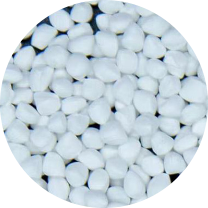
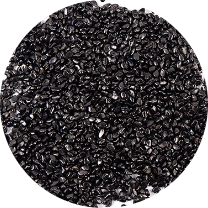
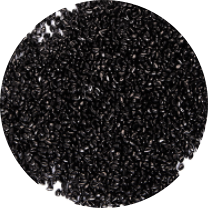
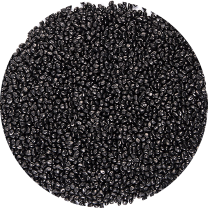
If you are interested in our products, please consult us
CONTACT DETAILS
- Address : 11-1, No. 600 Tongjiang Middle Road, Xinbei District, Changzhou City, Jiangsu Province
- Whatsapp : 0086-13775276672
- Tel: 0086-13401333666
- Email: [email protected]
QUICK LINK
NEWS CENTER
MOBILE TERMINAL
Copyright © Changzhou Runyi New Material Technology Co., Ltd. All Rights Reserved.
Custom China Antibacterial Masterbatch


 CONTACT US