

 English
 中文简体
中文简体 한국어
한국어 عربى
عربى

NEWS
Home / News / Industry News / What are the Benefits of Using High-Dispersion Plastic Black Masterbatch for Thin-Film and Packaging Applications?


What are the Benefits of Using High-Dispersion Plastic Black Masterbatch for Thin-Film and Packaging Applications?
Article Directory
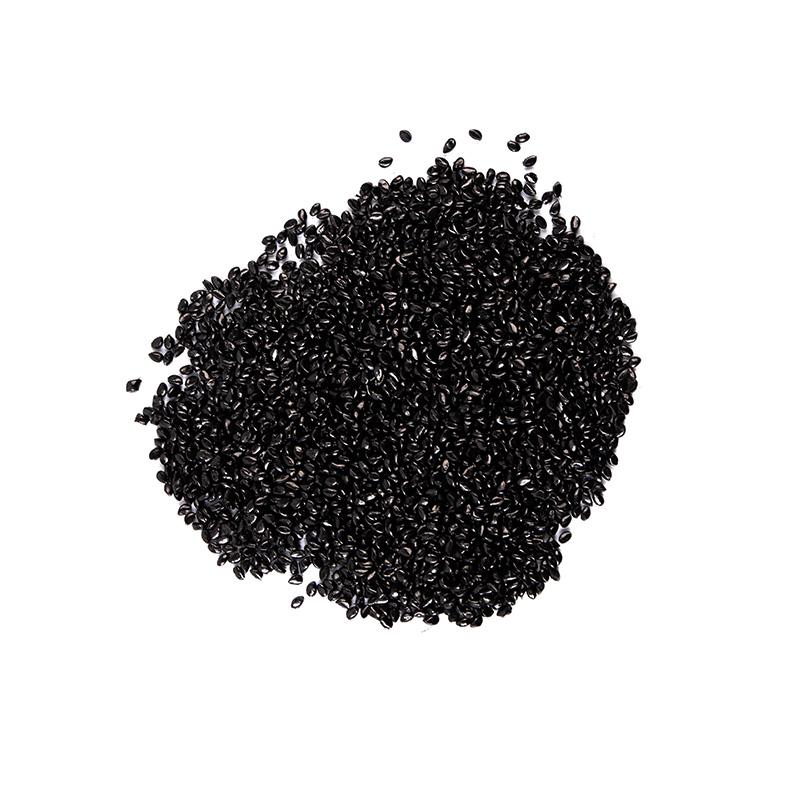
In the highly competitive flexible packaging industry, the quality of the final product is dictated by the microscopic behavior of its additives. For thin-film applications, where gauge thickness is often measured in microns, the performance of plastic black masterbatch is paramount. Improperly dispersed pigments can lead to structural weaknesses, "fish eyes," and compromised barrier properties. Changzhou Runyi New Material Technology Co., Ltd., a leader in the Yangtze River Delta, leverages years of R&D and international production standards to provide high-performance solutions that maximize energy conservation and product excellence.
The Critical Role of Dispersion in Thin-Film Integrity
Thin-film extrusion requires a high pigment black masterbatch that can achieve a homogenous melt without aglommerates. When carbon black particles are not perfectly dispersed, they act as stress concentrators, which significantly reduces the tensile strength of the film compared to a well-dispersed matrix. Our carbon black products are engineered to ensure that every particle is encapsulated by the carrier resin, maintaining the mechanical integrity of the polymer.
Performance Comparison: Standard vs. High-Dispersion Masterbatch
While standard masterbatches may suffice for thick injection-molded parts, thin-film applications reveal their flaws through pinholes and surface irregularities. High-dispersion grades ensure a smooth surface finish and consistent opacity even at lower addition rates.
| Technical Parameter | Standard Grade Masterbatch | High-Dispersion Grade (Runyi) |
| Agglomerate Count | Visible under 50x magnification | Negligible / International Standard compliant |
| Surface Quality | Rough, potential for "fish eyes" | Excellent gloss and smoothness |
| Filter Pressure Value (FPV) | High (Increases machine wear) | Low (Extends screen life) |
| Opacity/Jetness | Inconsistent in thin gauges | Superior jetness and deep blackness |
Enhancing UV Resistance and Barrier Properties
Packaging materials, especially for agricultural or industrial use, require long-term environmental stability. Utilizing a UV resistant black masterbatch is the most efficient way to prevent photo-degradation. Carbon black serves as both a pigment and an ultra-fine UV absorber, but its efficiency is directly proportional to its surface area and dispersion quality. By maximizing the surface area of the carbon black through our specialized production processes, we enhance the protection against polymer chain scission caused by ultraviolet radiation.
- Thermal Stability: High-quality masterbatches prevent degradation during the high-temperature extrusion processes required for carbon black masterbatch for PE film.
- Gas Barrier Efficiency: Well-dispersed particles create a more tortuous path for oxygen and moisture, improving the shelf-life of packaged contents.
- Chemical Inertness: Our formulations are produced according to international standards to ensure compatibility with various food-grade and industrial resins.
Optimizing Production Efficiency for B2B Manufacturers
From an engineering perspective, the use of a low let-down black masterbatch allows manufacturers to achieve the desired opacity with less material, reducing the overall cost of the formulation. Changzhou Runyi New Material Technology Co., Ltd. has optimized its production lines to ensure that our masterbatches have high compatibility with LLDPE, LDPE, and HDPE resins. This compatibility reduces "die buildup" and allows for higher line speeds without sacrificing film quality.
Process Optimization: Impact on Equipment Longevity
The use of inferior masterbatches often leads to frequent filter screen changes and increased energy consumption. In contrast, a premium black masterbatch for flexible packaging lowers the melt viscosity and pressure, which maximizes energy conservation and consumption reduction during the production process.
| Operational Metric | Low-Quality Masterbatch | High-Quality Engineered Grade |
| Screen Change Frequency | Every 4-8 hours | 24+ hours or continuous |
| Energy Consumption | High due to back-pressure | Optimized/Lowered |
| Waste Rate | 3-5% (Due to pinholes) | < 0.5% |
Innovation in Specialized Electret and Melt-Blown Applications
Since 2020, our dedicated R&D team has expanded the application of carbon black technology into the melt-blown fabric sector. The development of black masterbatch for melt blown fabric, alongside fluorocarbon polymer and water electret masterbatches, demonstrates our commitment to technological innovation. These specialized materials require even higher levels of dispersion to ensure they do not interfere with the electrostatic charging of the fibers, which is critical for high-efficiency filtration.
Frequently Asked Questions (FAQ)
- Q1: What determines the "jetness" of a black masterbatch?
A: Jetness is primarily influenced by the particle size of the carbon black and the quality of the dispersion. Smaller particles and better dispersion result in a deeper, more vibrant black. - Q2: Can using a high-pigment masterbatch reduce my overall costs?
A: Yes. High-pigment concentrations combined with superior dispersion allow for lower "let-down" ratios (LDR), meaning you use less masterbatch to achieve the same opacity, reducing transport and material costs. - Q3: How does Runyi ensure environmental protection during production?
A: We maximize energy conservation and consumption reduction through optimized production equipment and strict process controls that align with modern environmental standards. - Q4: Why is dispersion so critical for agricultural mulch films?
A: Mulch films are very thin. Poor dispersion creates weak spots that cause the film to tear under wind stress or mechanical laying, while also creating "light leaks" that allow weeds to grow. - Q5: Are your masterbatches compatible with biodegradable resins?
A: We continuously develop new varieties to meet market needs, including carrier resins that are compatible with bio-polymers and other innovative packaging materials.
Industry References
- ASTM D3849: Standard Test Method for Carbon Black - Morphological Characterization using Electron Microscopy.
- ISO 18553: Method for the assessment of the degree of pigment or carbon black dispersion in polyolefin pipes, fittings and compounds.
- Journal of Plastic Film and Sheeting: Research on Carbon Black dispersion and its effects on tensile properties of LDPE films.
- International Carbon Black Association (ICBA): Technical guidelines for safe and efficient use of Carbon Black in polymers.
prevNo previous article
nextConductive vs. Pigment-Grade: Technical Analysis of Carbon Black Master Batch

Popular products
The main products include various types of plastic film bags, such as takeout packaging bags, express bags, shopping bags, food composite bags, wrapping films, agricultural film, etc., and disposable dining utensils, such as lunch boxes, knives, forks, spoons, etc.
If you are interested in our products, please consult us
CONTACT DETAILS
- Address : 11-1, No. 600 Tongjiang Middle Road, Xinbei District, Changzhou City, Jiangsu Province
- Whatsapp : 0086-13775276672
- Tel: 0086-13401333666
- Email: [email protected]
QUICK LINK
NEWS CENTER
MOBILE TERMINAL
Copyright © Changzhou Runyi New Material Technology Co., Ltd. All Rights Reserved.
Custom China Antibacterial Masterbatch


 CONTACT US