
 English
 中文简体
中文简体 한국어
한국어 عربى
عربى

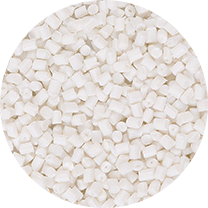
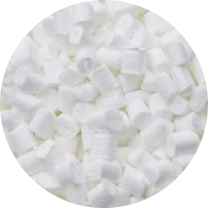
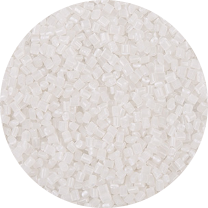
Meltblown masterbatch is a concentrated functional additive compound — typically a carrier resin loaded with performance chemicals at 20–60% concentration — that is blended with base polypropylene resin before or during the meltblown extrusion process to impart specific properties to the finished nonwoven fabric. These properties include electrostatic charge retention for filtration efficiency, hydrophilicity or hydrophobicity, antimicrobial activity, UV stabilisation, and colour. A correctly specified meltblown masterbatch allows manufacturers to achieve performance targets that base polypropylene resin alone cannot reach, while maintaining the ultra-fine fibre diameter (0.5–10 microns) and low basis weight (10–60 gsm) that define meltblown nonwoven fabric.
What Meltblown Masterbatch Does and Why It Matters
Meltblown fabric is produced by extruding molten polypropylene through a die with hundreds of fine orifices while high-velocity hot air attenuates the polymer stream into sub-micron fibres that are collected on a moving belt or drum. The resulting web has exceptional filtration properties — it is the critical filtration layer in N95 respirators, surgical masks, and HEPA filter media — but achieving the performance levels required by EN 149, NIOSH 42 CFR Part 84, or ISO 29463 demands more than raw resin alone. Masterbatch provides the functional chemistry that bridges the gap between what a base resin can do and what a finished filtration product must achieve.
The COVID-19 pandemic exposed global dependence on high-performance meltblown fabric when demand for N95-class respirators increased by 1,000–3,000% within weeks. Manufacturers who had correctly specified electret masterbatch could rapidly scale; those relying on untreated meltblown fabric could not achieve the required PFE (Particle Filtration Efficiency) regardless of how they optimised their process parameters. This distinction — between performance that comes from process optimisation alone and performance that requires functional chemistry — is the foundational argument for meltblown masterbatch in filtration applications.
Types of Meltblown Masterbatch and Their Functions
Different masterbatch types address different performance requirements. A meltblown production line manufacturing multiple end products will typically maintain a library of masterbatch formulations, selecting the appropriate type for each product specification:
| Masterbatch Type | Active Chemistry | Primary Effect on Meltblown Fabric | Key Application |
|---|---|---|---|
| Electret / charge enhancement | Triboelectric additives, fluorochemical electret agents | Increases and stabilises electrostatic charge on fibres for filtration efficiency | N95, KN95 respirators, surgical masks, HVAC filters |
| Hydrophilic | Polyethylene glycol (PEG) derivatives, surfactant packages | Reduces fibre surface energy; allows water and body fluids to pass through | Medical drapes, hygiene topsheets, wound care |
| Hydrophobic / water repellent | Fluoropolymer additives, silicone compounds | Increases contact angle; repels water, oils, and low-surface-tension liquids | Protective apparel, outdoor filtration, liquid barrier layers |
| Antimicrobial | Silver ion compounds, zinc pyrithione, PHMB | Inhibits bacterial and fungal growth on the fabric surface | Medical face masks, food processing filters, HVAC media |
| UV stabiliser | HALS (hindered amine light stabilisers), UV absorbers | Retards photodegradation of polypropylene in outdoor exposure | Agricultural covers, geotextile filter layers |
| Colour masterbatch | Pigment concentrates in PP carrier | Imparts consistent colour without affecting fibre formation | Medical colour-coding, industrial identification, branded products |
| Melt flow modifier | Peroxide-based viscosity reducers, rheology modifiers | Increases melt flow index of base resin for finer fibre attenuation | Ultra-fine fibre production for sub-micron filtration |
Electret Masterbatch — The Most Critical Type for Filtration
Of all meltblown masterbatch types, electret masterbatch has the greatest impact on the commercial value of the finished product. An electret is a material that holds a quasi-permanent electrostatic charge — analogous to a permanent magnet, but for electric rather than magnetic fields. Meltblown polypropylene fibres treated with electret chemistry and subjected to a corona discharge or hydrocharge process retain a surface charge that attracts and captures airborne particles, including viral aerosols, bacterial particles, and fine dust, through electrostatic interception in addition to the mechanical filtration that all fibre structures provide.
Why Electret Charge Makes Such a Large Difference
The quantitative impact of electret treatment on filtration efficiency is substantial. Testing of identical meltblown fabrics before and after electret activation consistently demonstrates:
- Particle Filtration Efficiency (PFE) increase from 35–55% to 95–99.9% for the most penetrating particle size (MPPS, typically 0.1–0.3 microns) without any increase in fabric basis weight or change in pressure drop. This means the breathing resistance of the mask does not increase while filtration efficiency improves dramatically.
- BFE (Bacterial Filtration Efficiency) above 98% is achievable at basis weights of 20–30 gsm with correctly specified electret masterbatch — the same performance would require 80–120 gsm of uncharged meltblown fabric, adding both cost and breathing resistance.
- Charge stability determines product shelf life. Electret charge decays over time, particularly when exposed to heat, humidity, or contaminating aerosols. Electret masterbatch formulations that include charge-stabilising additives maintain greater than 95% of initial PFE after 3 years of storage at 25 degrees Celsius and 75% relative humidity — a performance level required by medical device regulatory submissions in the US and EU.
Electret Activation Methods and How Masterbatch Interacts with Them
The electret masterbatch creates the chemical environment that allows charge to be implanted and retained — but the charge itself is applied by a separate activation step after fabric formation:
- Corona discharge: The fabric passes between high-voltage electrodes (15–50 kV) that inject charge carriers into the fibre surfaces. The electret masterbatch additives act as charge trapping sites — without them, injected charges dissipate within hours. With correctly formulated masterbatch, corona-charged meltblown fabric retains functional PFE for 3–5 years.
- Hydrocharging (water needle charging): High-pressure water jets (200–600 bar) impact the fabric surface, generating triboelectric charge as water contacts and rebounds from the fibres. This method is increasingly preferred over corona discharge because it simultaneously cleans the fabric surface and produces a more uniform charge distribution. Hydrophobic masterbatch additives in electret formulations enhance the triboelectric charge generation during hydrocharging by increasing the hydrophobic character of the fibre surface, which amplifies the charge separation effect at the water-fibre interface.
- Thermal polarisation: The fabric is heated to 60–90 degrees Celsius in the presence of an electric field, then cooled while the field remains applied. This method produces the most stable long-term charge retention but requires specialised equipment and is used primarily for high-performance industrial filtration applications rather than medical masks.
Melt Flow Index — Why It Governs Masterbatch Selection
The melt flow index (MFI) of the polypropylene resin used in meltblown production is the single most important processing parameter, and masterbatch selection must be compatible with the resin MFI being used. Meltblown production requires resins with very high MFI — typically 800–1800 g/10 min at 230 degrees Celsius, 2.16 kg — compared to 2–30 g/10 min for injection moulding grades and 20–40 g/10 min for spunbond grades. This extreme fluidity allows the polymer to be attenuated into fibres of 1–5 microns diameter by the high-velocity airstream.
| Base Resin MFI | Typical Fibre Diameter | Fabric Characteristic | Masterbatch Compatibility Requirement |
|---|---|---|---|
| 400 – 600 g/10 min | 3 – 10 microns | Coarser; higher strength; lower filtration efficiency | Masterbatch carrier MFI: 400 – 800 g/10 min minimum |
| 800 – 1200 g/10 min | 1 – 5 microns | Standard meltblown for masks and filters | Masterbatch carrier MFI: 800 – 1500 g/10 min |
| 1200 – 1800 g/10 min | 0.5 – 2 microns | Ultra-fine filtration; sub-micron capture | Masterbatch carrier MFI: 1200 – 2000 g/10 min |
If the masterbatch carrier resin has a significantly lower MFI than the base resin, the blend will have a reduced overall MFI, producing thicker fibres, a coarser fabric structure, and reduced filtration performance. This is why masterbatch formulated for spunbond applications cannot be substituted for meltblown masterbatch — the carrier resin viscosity mismatch disrupts the fibre attenuation process at the die.
Addition Rate and Blending Method
Meltblown masterbatch is used at low addition rates compared to other polymer additives — typically 1–5% by weight of the total resin blend — because the active chemistry is concentrated to a high loading in the masterbatch pellet. The precise addition rate depends on the masterbatch active content, the end-use performance specification, and the base resin's inherent properties. Adding more masterbatch than the optimum does not linearly improve performance and can degrade mechanical properties or cause processing problems at the die.
Gravimetric Dosing — The Required Standard for Meltblown Lines
Meltblown production demands gravimetric (loss-in-weight) dosing of masterbatch rather than volumetric dosing. Volumetric feeders measure dispensed volume, which varies as pellet bulk density changes between bags and lots. Gravimetric feeders measure dispensed mass directly, maintaining the specified addition rate to within plus or minus 0.1% regardless of pellet density variation. At a 2% target addition rate on a 200 kg/hour meltblown line, a volumetric feeder with 5% accuracy introduces a dosing error of plus or minus 0.1 kg/hour — sufficient to produce measurable filtration efficiency variation between rolls of finished fabric.
Pre-Blend vs. Side-Stream Addition
- Pre-blending: Masterbatch and base resin are tumble-blended in a container before being loaded into the extruder hopper. Simple and low-cost, but requires careful mixing to achieve uniform distribution. Pre-blends can segregate if pellet sizes and densities differ significantly between masterbatch and base resin — a particular risk with high-density masterbatch pellets and low-density high-MFI base resin.
- Gravimetric side-stream dosing at the extruder throat: The base resin and masterbatch are fed separately through independent gravimetric feeders directly into the extruder throat, where the screws provide mixing. This method provides real-time dosing control, eliminates segregation risk, and allows immediate adjustment of addition rate without reblending a batch. It is the recommended method for production lines where consistent filtration performance across rolls is a documented quality requirement.
- Twin-screw compounding ahead of the meltblown die: Some high-performance applications use an upstream twin-screw compounder to disperse masterbatch into the base resin before the single-screw meltblown extruder. This provides the highest mixing quality but adds equipment complexity and a residence time that must be controlled to prevent thermal degradation of heat-sensitive electret additives.
Quality Parameters for Evaluating Meltblown Masterbatch
Not all masterbatch products claiming identical performance deliver identical results in production. The following technical parameters should be verified by the masterbatch supplier and independently tested on production trials before large-volume purchasing commitments are made:
| Parameter | Test Method | Acceptable Range (electret masterbatch) | Why It Matters |
|---|---|---|---|
| Active content loading | TGA (thermogravimetric analysis) | Declared value plus or minus 1.5% | Dosing accuracy depends on consistent active loading per kg of masterbatch |
| Carrier resin MFI | ISO 1133 (230C, 2.16 kg) | Matched to base resin — typically 800+ g/10 min for meltblown | MFI mismatch disrupts fibre attenuation and fabric uniformity |
| Moisture content | Karl Fischer titration or moisture analyser | Below 300 ppm | Moisture causes voids and breaks in fine fibres during extrusion |
| Dispersion quality | Filter pressure value (FPV) test or microtome cross-section | FPV below 0.8 bar/g | Agglomerated particles block die orifices and cause fibre breaks |
| Thermal stability | TGA up to 280 degrees Celsius | No decomposition below processing temperature | Decomposition produces volatiles that contaminate die and reduce charge stability |
| PFE on test fabric | TSI 8130A or equivalent at 0.3 micron NaCl | Above 95% PFE at specified addition rate after charging | Ultimate measure of whether the masterbatch delivers its filtration claim |
Storage and Handling Requirements
Meltblown masterbatch — particularly electret and antimicrobial types — requires storage conditions that prevent moisture absorption, thermal degradation, and contamination of the active chemistry before it reaches the extruder:
- Temperature control: Store at 15–25 degrees Celsius in a dry environment. Temperatures above 35 degrees Celsius for extended periods can cause fluorochemical electret additives to migrate to the pellet surface and volatilise, reducing the effective concentration in the batch. Some silver-ion antimicrobial masterbatches are similarly heat-sensitive and must be stored below 30 degrees Celsius.
- Moisture protection: Unopened bags of masterbatch in sealed moisture-barrier packaging maintain acceptable moisture content indefinitely. Once opened, masterbatch should be used within 48 hours or resealed with desiccant. High-MFI polypropylene carriers absorb moisture more readily than standard grades — pre-drying opened masterbatch at 70–80 degrees Celsius for 2–4 hours in a dehumidifying dryer before use is recommended when ambient humidity exceeds 60% RH.
- Lot traceability: Each bag of masterbatch should carry a lot number that is recorded against the production rolls it contributes to. If a quality issue is identified in finished fabric — for example, PFE below specification — lot traceability allows the affected production to be identified and contained without recalling the entire inventory from a given period.
- First-in-first-out (FIFO) rotation: Electret masterbatch has a shelf life of 12–24 months from manufacture, beyond which charge-generation chemistry may have partially degraded even in sealed storage. FIFO stock rotation ensures that the oldest inventory is consumed first and that masterbatch approaching its shelf life is identified before it enters production without retesting.