

 English
 中文简体
中文简体 한국어
한국어 عربى
عربى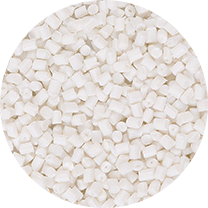

NEWS
Home / News / Industry News / Why Injection White Masterbatch Is Widely Used in Modern Plastic Injection Molding


Why Injection White Masterbatch Is Widely Used in Modern Plastic Injection Molding
Article Directory
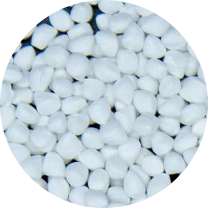
Plastic manufacturers rarely add raw titanium dioxide powder to a mold anymore. Instead, injection white masterbatch delivers that same whitening power in a clean, pre-dispersed pellet form, which is why it now shows up across packaging, consumer goods, automotive parts, and medical products wherever consistent white color matters.
TiO2 Carrier Resin Dispersing Additives Processing Aids
Typical composition of an injection white masterbatch pellet
Why color quality drives injection molding decisions
Modern plastic products need uniform color appearance, high brightness, and stable quality from one production batch to the next. Color performance directly affects product appearance, brand image, and market acceptance across packaging, consumer products, automotive components, electronics, and medical products.
How white masterbatch improves plastic performance
- Whitening effect — titanium dioxide creates a bright, consistent white shade across finished products.
- Opacity and covering power — hides the original color of recycled or colored base materials.
- Color consistency — uniform pigment dispersion reduces variation between production batches.
- Processing performance — easier material handling improves production stability.
What sets masterbatch apart from direct pigment
| Factor | Injection White Masterbatch | Direct Pigment Addition |
| Dispersion | More uniform | Requires intensive mixing |
| Handling | Cleaner and easier | More dust and handling issues |
| Color Stability | More consistent | Depends on mixing accuracy |
| Production Efficiency | Higher | More complex processing |
| Storage | Convenient pellets | Powder handling required |
Key Insight
Because pigment is already dispersed inside the carrier resin, masterbatch removes the mixing-accuracy variable that causes most batch-to-batch color drift in direct pigment addition.
Where injection white masterbatch is commonly used
Plastic packaging manufacturers rely on it for food containers, cosmetic packaging, and household packaging that need attractive, consistent white color. Consumer product makers use it across household items and electronic accessories, automotive suppliers apply it to interior and decorative components needing stable color under durability requirements, and medical product manufacturers depend on it for the clean, professional appearance disposable items and lab items require.
How to choose the right white masterbatch
Titanium Dioxide Content
Match whitening strength and opacity level to your application standards.
Carrier Resin Compatibility
PP, PE, ABS, PS, or PET carrier resin should match your base polymer for better dispersion.
Processing Temperature
Confirm thermal stability against your actual injection molding temperature range.
Final Product Requirements
Let appearance, durability, and the application environment guide the final formulation.
Production runs through raw material selection, mixing and dispersion, twin-screw extrusion for uniform dispersion, pelletizing, and quality testing covering whiteness, dispersion, melt flow rate, and moisture content. The category is trending toward higher-performance TiO2 formulations, recyclable plastic compatibility, and lower-carbon manufacturing, keeping injection white masterbatch central to how manufacturers control color as sustainability pressure grows.
prevNo previous article
nextHow to Choose Injection White Masterbatch for Plastic Injection Molding, Color Consistency and Industrial Polymer Applications

Popular products
The main products include various types of plastic film bags, such as takeout packaging bags, express bags, shopping bags, food composite bags, wrapping films, agricultural film, etc., and disposable dining utensils, such as lunch boxes, knives, forks, spoons, etc.
If you are interested in our products, please consult us
CONTACT DETAILS
- Address : 11-1, No. 600 Tongjiang Middle Road, Xinbei District, Changzhou City, Jiangsu Province
- Whatsapp : 0086-13775276672
- Tel: 0086-13401333666
- Email: [email protected]
QUICK LINK
NEWS CENTER
MOBILE TERMINAL
Copyright © Changzhou Runyi New Material Technology Co., Ltd. All Rights Reserved.
Custom China Antibacterial Masterbatch


 CONTACT US