

 English
 中文简体
中文简体 한국어
한국어 عربى
عربى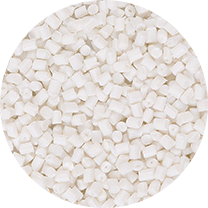

NEWS
Home / News / Industry News / How to Choose Injection White Masterbatch for Plastic Injection Molding, Color Consistency and Industrial Polymer Applications


How to Choose Injection White Masterbatch for Plastic Injection Molding, Color Consistency and Industrial Polymer Applications
Article Directory
- 1 Section 01What is injection white masterbatch and how is it used in plastic processing?
- 2 Section 02What are the main types of white masterbatch?
- 3 Section 03Where is injection white masterbatch commonly used?
- 4 Section 04What performance properties should injection white masterbatch provide?
- 5 Section 05How is injection white masterbatch manufactured?
- 6 Section 06How does injection white masterbatch compare with direct pigment addition?
- 7 Section 07What are the limitations of injection white masterbatch?
- 8 Section 08What is the future trend of white masterbatch in plastic industry?
- 9 FAQFrequently Asked Questions
Technical Note
Getting a consistent white across thousands of injection-molded parts is harder than it looks — raw pigment behaves differently batch to batch, while a properly formulated concentrate is built specifically to solve that problem. Injection white masterbatch is the standard way processors add reliable, repeatable white color to polymer without handling loose powder pigment on the shop floor. This guide covers what it is, how it's made, where it's used, and how it stacks up against adding pigment directly.
Section 01What is injection white masterbatch and how is it used in plastic processing?
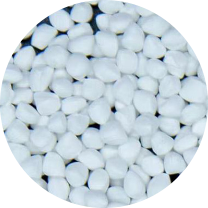
Injection white masterbatch is a concentrated blend of titanium dioxide pigment dispersed in a carrier resin, formed into pellets that are dosed alongside natural resin during injection molding. Rather than metering loose pigment powder — which is messy, inconsistent, and difficult to disperse evenly — processors add a measured percentage of this polymer additive concentrate directly into the hopper, where it melts and blends with the base resin during processing.
As an injection molding color compound, the titanium dioxide masterbatch carries both the pigment and a compatible carrier resin in one pellet form, so the whiteness and the base plastic are already matched for melt behavior before the part is even molded.
Section 02What are the main types of white masterbatch?
Not every white masterbatch is built for the same process or resin, and grade selection affects both appearance and processability.
High TiO2 white masterbatch
Injection molding grade
Film grade masterbatch
Blow molding grade
Universal polymer grade
The injection grade vs film grade masterbatch difference generally comes down to carrier resin melt flow and pigment loading — injection grades are formulated for thicker-walled parts and shorter cycle times, while film grade material is dispersed for the thin cross-sections and high draw ratios used in extrusion. Choosing which white masterbatch is best for injection molding usually starts with the base resin the part will be molded from, since the carrier resin needs to be compatible with it.
Section 03Where is injection white masterbatch commonly used?
Injection molded products
Housings, closures, and structural components molded in bulk.
Household plastics
Appliance parts and everyday plastic goods where a clean white finish is expected.
Automotive parts
Interior trim and under-hood components requiring consistent color batch to batch.
Packaging containers
Caps, closures, and rigid containers where color uniformity affects shelf appearance.
Industrial components
Functional polymer parts where color is secondary to consistent processing behavior.
Across all of these categories, white masterbatch for injection molded parts is chosen for the same underlying reason: it lets a molder switch resin colors quickly between production runs without cleaning out pigment feeders or requalifying a new pigment blend each time.
Section 04What performance properties should injection white masterbatch provide?
-
High whiteness index pigment
A bright, neutral white base that doesn't read as gray or off-tone under normal lighting.
-
Good dispersion in polymer
Pigment particles spread evenly through the carrier resin rather than clumping into visible specks.
-
Heat resistance and processing stability
Holds its color and performance through the temperatures used in injection molding cycles.
-
UV resistance
Limits yellowing or fading in parts exposed to sunlight over their service life.
-
Consistent color output
The same dosing ratio produces the same shade of white run after run.
Good dispersion in polymer is arguably the property that separates a well-made masterbatch from a poorly compounded one — even with the correct pigment loading, uneven dispersion shows up as visible spots or streaks on the finished part surface.
Section 05How is injection white masterbatch manufactured?
Production combines pigment dispersion, resin blending, and pelletizing into a repeatable sequence.
Titanium dioxide
+
Carrier resin
+
Additives
Masterbatch pellets
The process begins with titanium dioxide dispersion, where pigment is wetted out and blended into a carrier resin using twin screw extrusion compounding — the high shear of a twin-screw extruder is what breaks down pigment agglomerates into a fine, even dispersion. Polymer carrier resin blending continues through the extruder barrel, after which the molten strand is cooled and cut during pelletizing masterbatch production. Quality control color matching follows on finished pellets, checking whiteness and dispersion consistency against a reference standard before the batch is released for shipment.
Section 06How does injection white masterbatch compare with direct pigment addition?
Pre-dispersed, consistent dosing
Powder pigment, variable by batch
Clean handling, no dust
Dust exposure and cleanup required
Stable melt processing behavior
Can affect flow if poorly wetted
Higher material cost per kilogram
Lower raw material cost
In the masterbatch vs raw pigment usage comparison, cost efficiency of coloring methods tends to favor raw pigment on paper, but color consistency comparison across plastics production usually favors masterbatch once rework and quality rejects are factored in. Processing stability differences also matter — dispersion quality comparison consistently shows masterbatch producing fewer visible defects than powder pigment added directly at the press, which is why masterbatch is preferred in injection molding for most production-scale operations.
Section 07What are the limitations of injection white masterbatch?
Cost higher than raw pigment — the compounding step adds cost compared with buying powder pigment alone.
Compatibility limitations — the carrier resin must match or be compatible with the base polymer being colored.
Overdosing color issues — adding too much masterbatch can shift shade or affect mechanical properties slightly.
Storage moisture sensitivity — pellets can absorb moisture if stored in humid conditions, affecting processing.
Batch variation control — consistency still depends on the manufacturer's quality control between production runs.
Can masterbatch affect plastic strength is a fair question — at correct dosing rates it generally does not, but overdosing beyond recommended ratios can begin to influence mechanical properties, which is one reason dosing guidelines matter as much as pigment quality itself.
Section 08What is the future trend of white masterbatch in plastic industry?
Sustainability pressure and rising use of recycled feedstock are both shaping how white masterbatch, including formulations positioned as injection white masterbatch, will be developed going forward.
Eco friendly additives Recycled plastic masterbatch High performance concentrates Low carbon manufacturing Advanced dispersion tech
Eco friendly polymer additives are being formulated to work reliably with recycled plastic masterbatch systems, which often start from a less consistent feedstock than virgin resin. High performance color concentrates are being developed to mask the slight discoloration that recycled content can introduce, supporting low carbon plastic manufacturing goals without sacrificing whiteness. Advanced dispersion technology continues to push pigment particle size down further, improving both color strength and surface finish on the molded part.
FAQFrequently Asked Questions
What is injection white masterbatch?
A concentrated pellet form of titanium dioxide pigment in a carrier resin, dosed into base plastic during injection molding to add white color.
What is white masterbatch used for?
It is used to color plastic parts a consistent white across injection molding, film, and blow molding processes.
Can masterbatch replace pigment?
Yes, masterbatch is designed specifically to replace loose powder pigment with a pre-dispersed, easier-to-handle alternative.
Is white masterbatch safe in plastics?
When formulated with appropriate food or industrial grade ingredients for the intended application, it is designed to be safe for its specified use.
How much masterbatch should be used?
Dosage depends on the desired shade and the manufacturer's recommended ratio, and should follow the supplier's technical guidance rather than a fixed rule.
What is TiO2 masterbatch?
A masterbatch where titanium dioxide is the primary pigment, valued for its high whiteness and opacity in plastic coloring.
prevNo previous article
nextHow to Choose Carbon Black Masterbatch for Plastic Coloring, UV Protection and Industrial Applications

Popular products
The main products include various types of plastic film bags, such as takeout packaging bags, express bags, shopping bags, food composite bags, wrapping films, agricultural film, etc., and disposable dining utensils, such as lunch boxes, knives, forks, spoons, etc.
If you are interested in our products, please consult us
CONTACT DETAILS
- Address : 11-1, No. 600 Tongjiang Middle Road, Xinbei District, Changzhou City, Jiangsu Province
- Whatsapp : 0086-13775276672
- Tel: 0086-13401333666
- Email: [email protected]
QUICK LINK
NEWS CENTER
MOBILE TERMINAL
Copyright © Changzhou Runyi New Material Technology Co., Ltd. All Rights Reserved.
Custom China Antibacterial Masterbatch


 CONTACT US