

 English
 中文简体
中文简体 한국어
한국어 عربى
عربى

NEWS
Home / News / Industry News / How to Ensure Optimal Dispersion and Tinting Strength in a High-Quality Carbon Black Master Batch?


How to Ensure Optimal Dispersion and Tinting Strength in a High-Quality Carbon Black Master Batch?
Article Directory
- 1 The Science of Dispersion: Why Particle Size Matters
- 2 Optimizing Tinting Strength through Formulation
- 3 Specialized Solutions: From Melt Blown to Electret Applications
- 4 Frequently Asked Questions (FAQ)
- 4.1 1. How do you measure the tinting strength carbon black for plastics?
- 4.2 2. What makes melt blown fabric black masterbatch different from standard grades?
- 4.3 3. Why is UV protection important in carbon black master batch?
- 4.4 4. Can a high jetness black masterbatch for automotive applications affect the plastic's strength?
- 4.5 5. What is the role of electret masterbatches in filtration?
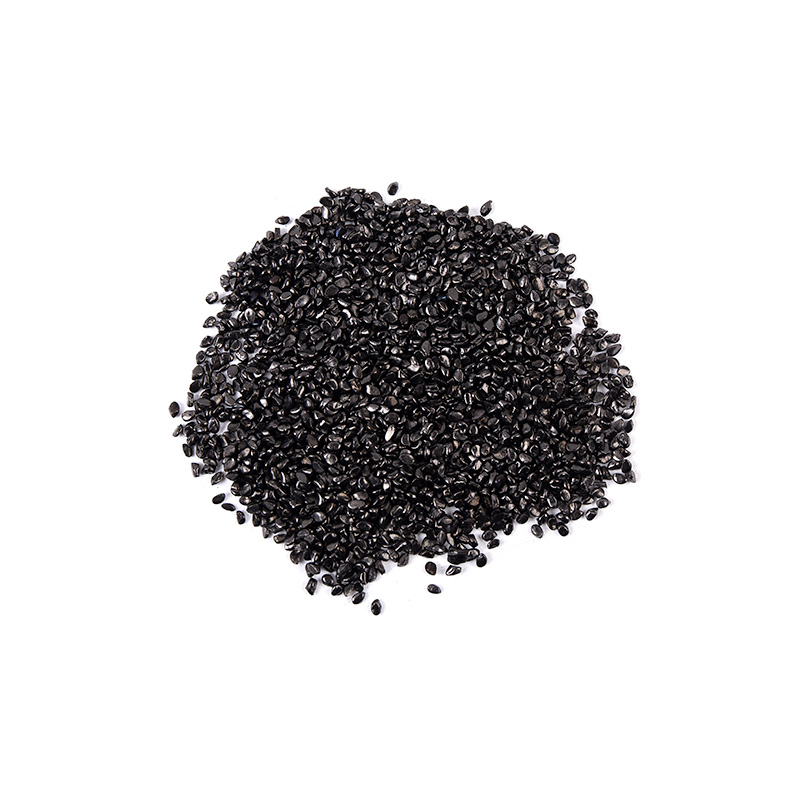
In the precision-driven world of polymer processing, achieving a flawless finish and consistent color performance depends entirely on the quality of the pigment carrier. For engineers and B2B procurement specialists, the challenge is clear: how to maintain superior jetness without compromising mechanical properties. Changzhou Runyi New Material Technology Co., Ltd., strategically located in the Yangtze River Delta, has addressed this through a specialized focus on R&D and advanced production techniques. By optimizing carbon black master batch formulations, we ensure that our products meet the highest international standards for dispersion and electrical performance.
The Science of Dispersion: Why Particle Size Matters
Optimal dispersion is the process of breaking down pigment agglomerates into primary particles or small aggregates within the polymer matrix. A high-quality carbon black master batch must overcome the high surface energy of carbon black particles to prevent "clumping." According to the 2024 Global Specialty Carbon Black Market Analysis by the International Carbon Black Association (ICBA), the industry is shifting toward "sustainable specialty blacks" with surface-modified chemistries that enhance wet-out and reduce viscosity in thermoplastic carriers.
Source: ICBA - Specialty Carbon Black Technical Trends and Market Outlook
Agglomerate Reduction vs. Distribution Efficiency
While distribution refers to the spatial arrangement of particles, dispersion focuses on the physical breakdown of those particles. Achieving a high tinting strength carbon black for plastics requires a delicate balance of shear force during extrusion. If the shear is too low, large agglomerates remain, causing surface defects; if too high, the polymer chain may degrade, affecting the structural integrity of the final product.
| Metric | Standard Grade Masterbatch | High-Performance Runyi Grade |
| Filter Pressure Value (FPV) | > 2.5 bar/g (Higher risk of clogging) | < 1.0 bar/g (Superior cleanliness) |
| Surface Finish | Visible pinholes or "sand" marks | High-gloss, defect-free surface |
| Color Depth (Jetness) | Moderate with gray undertones | Deep, intense black (High Tinting Strength) |
Optimizing Tinting Strength through Formulation
Tinting strength is an indicator of the pigment's efficiency in imparting color. To achieve a high jetness black masterbatch for automotive parts or high-end consumer electronics, the choice of the carbon black pigment (N110 vs. N550 series) and the carrier resin is paramount. At Changzhou Runyi New Material Technology Co., Ltd., we utilize advanced twin-screw extrusion technology to ensure that the pigment is encapsulated perfectly, maximizing light absorption and minimizing scattering.
Carrier Compatibility and Melt Flow Index (MFI)
The MFI of the carrier resin in a carbon black master batch should ideally be higher than that of the base polymer to facilitate easier mixing. This is especially critical in melt blown fabric black masterbatch production, where even the slightest impurity or poor dispersion can lead to fiber breakage in 2025-standard high-efficiency filtration media. Recent technical bulletins from the American Filtration and Separations Society highlight that electret-enhanced masterbatches must maintain 100% pigment encapsulation to prevent interference with the charge-holding capacity of the fibers.
Source: AFS - Developments in Melt-Blown Nonwoven Technology and Masterbatch Integration
| Formulation Factor | Impact on Tinting Strength | Impact on Dispersion |
| Pigment Loading (40-50%) | Directly proportional to color depth | Increases viscosity; requires high shear |
| Processing Additives | Prevents pigment leaching | Reduces interfacial tension between pigment/resin |
| Melt Temperature | Affects final gloss/undertone | Determines the "wetting" of the pigment particles |
Specialized Solutions: From Melt Blown to Electret Applications
Since 2020, Changzhou Runyi New Material Technology Co., Ltd. has expanded into high-tech niches, investing in multiple production lines for melt blown fabric black masterbatch and electret masterbatches. For high-precision technical textiles, uv resistant black masterbatch for geomembranes and agricultural films must provide long-term protection against photo-degradation. Our commitment to energy conservation and environmental protection ensures that these materials are produced with minimal waste and maximum efficiency.
- Water Electret Masterbatch: Designed for high-charge retention in medical-grade masks.
- Oil Electret Masterbatch: Optimized for industrial filtration requiring high resistance to oily aerosols.
- Fluorocarbon Polymer Electret Masterbatch: Advanced solutions for extreme chemical environments.
- Excellent Dispersion: All products are processed under low viscosity carbon black dispersion protocols to ensure smooth extrusion.
Frequently Asked Questions (FAQ)
1. How do you measure the tinting strength carbon black for plastics?
Tinting strength is measured by blending the black masterbatch with a standard white pigment (typically TiO2) and measuring the reflectance. A higher value indicates that less masterbatch is required to achieve the desired color depth, saving costs for the manufacturer.
2. What makes melt blown fabric black masterbatch different from standard grades?
Melt blown grades require extreme cleanliness. The particles must be small enough to pass through spinnerets without clogging, necessitating a low viscosity carbon black dispersion and ultra-fine filtration during masterbatch production.
3. Why is UV protection important in carbon black master batch?
Carbon black is the most effective UV stabilizer for plastics. A uv resistant black masterbatch for geomembranes absorbs harmful radiation and converts it into heat, preventing the polymer chains from breaking down over years of outdoor exposure.
4. Can a high jetness black masterbatch for automotive applications affect the plastic's strength?
If poorly dispersed, the pigment particles act as stress concentrators, reducing impact strength. However, a well-dispersed carbon black master batch can actually improve the structural rigidity and thermal stability of automotive components.
5. What is the role of electret masterbatches in filtration?
Electret masterbatches, like the ones produced by Changzhou Runyi New Material Technology Co., Ltd., introduce a quasi-permanent electric charge to fibers. This allows the filter to trap sub-micron particles through electrostatic attraction, significantly increasing filtration efficiency without increasing air resistance.
prevNo previous article
nextThe Science of Black: Optimizing Polymer Performance via Carbon Black Masterbatch Particle Size and Structure

Popular products
The main products include various types of plastic film bags, such as takeout packaging bags, express bags, shopping bags, food composite bags, wrapping films, agricultural film, etc., and disposable dining utensils, such as lunch boxes, knives, forks, spoons, etc.
If you are interested in our products, please consult us
CONTACT DETAILS
- Address : 11-1, No. 600 Tongjiang Middle Road, Xinbei District, Changzhou City, Jiangsu Province
- Whatsapp : 0086-13775276672
- Tel: 0086-13401333666
- Email: [email protected]
QUICK LINK
NEWS CENTER
MOBILE TERMINAL
Copyright © Changzhou Runyi New Material Technology Co., Ltd. All Rights Reserved.
Custom China Antibacterial Masterbatch


 CONTACT US