

 English
 中文简体
中文简体 한국어
한국어 عربى
عربى

NEWS
Home / News / Industry News / The Science of Black: Optimizing Polymer Performance via Carbon Black Masterbatch Particle Size and Structure


The Science of Black: Optimizing Polymer Performance via Carbon Black Masterbatch Particle Size and Structure
Article Directory
- 1 The Engineering Role of Carbon Black Masterbatch
- 2 Impact of Particle Size on Color and UV Protection
- 3 The Role of Carbon Black Structure (Aggregation) on Conductivity and Dispersion
- 4 Manufacturing Excellence for Consistent Performance
- 5 Conclusion: Specification Drives Performance
- 6 Frequently Asked Questions (FAQ)
The Engineering Role of Carbon Black Masterbatch
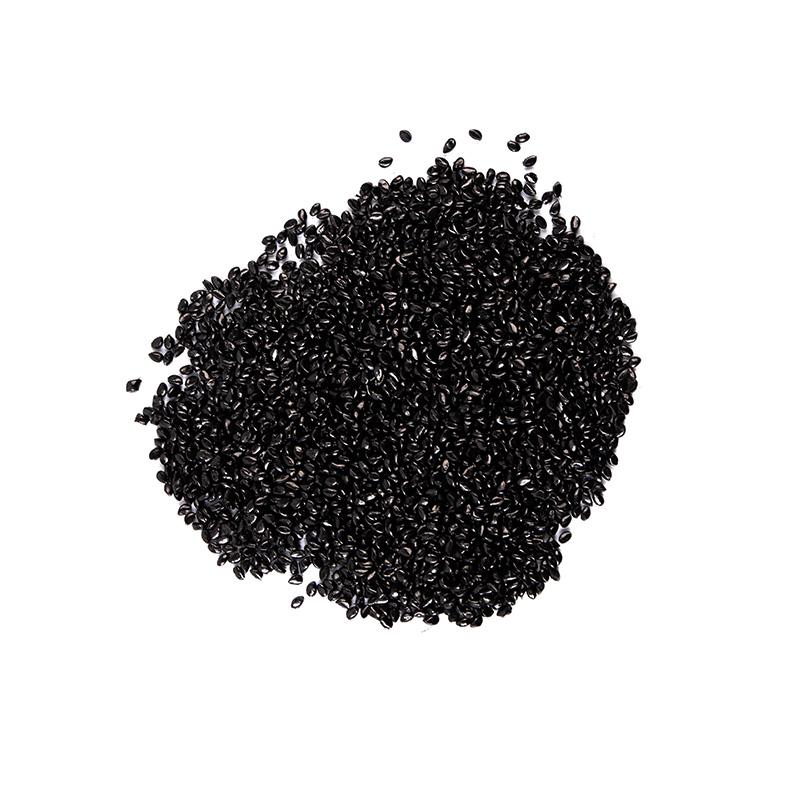
In the polymer industry, the carbon black masterbatch is far more than a simple coloring agent; it is a critical functional additive. Engineers leverage its unique physiochemical properties to impart essential characteristics, including protection against UV degradation, antistatic properties, and deep, consistent color.
For B2B buyers and formulators, the performance of the final plastic product—whether it is piping, automotive parts, or geomembranes—is fundamentally determined by the selection of the primary carbon black variables: particle size and structure (the degree of particle aggregation). Changzhou Runyi New Material Technology Co., Ltd. focuses on this technical precision, utilizing specialized R&D and production experience to deliver consistent, high-performance masterbatch solutions, including products used in demanding melt-blown fabric projects.
Impact of Particle Size on Color and UV Protection
Particle Size and Tinting Strength (Color Performance)
Color intensity, or "jetness," is inversely proportional to the primary particle size of the carbon black. Smaller particles create a larger total surface area within the polymer matrix. When light interacts with the material, the increased surface area enhances light absorption and scattering, resulting in a deeper, richer black color.
Therefore, Selecting carbon black masterbatch for maximum jetness requires specifying ultra-fine carbon black (typically less than 20 nm). Accurate Pigment black masterbatch tinting strength analysis confirms that these finer grades offer superior coloring efficiency, allowing for lower loading rates while achieving the desired visual depth.
Carbon Black Particle Size and Coloring Power Comparison
Smaller particle size leads to superior optical performance and better coverage.
| Carbon Black Grade | Primary Particle Size (nm) | Relative Jetness/Tinting Strength | Primary Application |
| High Color (HC) Grade | Under 20 | Very High | High-end plastics, coatings for maximum blackness |
| Regular Color (RC) Grade | 20 - 40 | Medium | General purpose coloring, UV stabilization |
Particle Size and UV Resistance (Weathering Performance)
Carbon black acts as the most effective UV screening agent for plastics. The mechanism involves absorbing harmful UV radiation and converting it into harmless heat. The effectiveness of Carbon black particle size effect on UV protection is optimized at a specific intermediate particle size range (around 20 to 25 nm).
Particles that are too small tend to lose effectiveness, and those that are too large (e.g., over 30 nm) reduce the overall UV absorption efficiency. Furthermore, carbon black acts as a free radical scavenger, halting the degradation chain reactions initiated by UV radiation within the polymer matrix.
The Role of Carbon Black Structure (Aggregation) on Conductivity and Dispersion
Structure and Electrical Conductivity
The structure of carbon black refers to the fusion of primary particles into three-dimensional clusters (aggregates). This structure is quantified by the DBP Absorption Number, where a higher number indicates a higher structure. High structure carbon black masterbatch conductivity is superior because the interlocking chains of aggregates form a continuous conductive pathway, or "percolation network," through the insulating polymer matrix.
This feature is essential for anti-static applications and for systems requiring Electrostatic Discharge (ESD) protection. High structure is deliberately chosen to achieve the low volume resistivity required in demanding applications.
Structure Comparison for Electrical Properties
The DBP Absorption Number is the primary technical indicator for predicting conductivity performance.
| Carbon Black Structure (DBP) | Aggregate Configuration | Electrical Conductivity | Primary Application Goal |
| Low Structure | Compact, spherical aggregates | Low (Requires high loading) | Maximum mechanical strength, coloring |
| High Structure | Branching, chain-like aggregates | High (Network forms easily) | ESD, Antistatic, conductive compounds |
Structure and Dispersion in the Polymer Matrix
One of the greatest technical challenges in manufacturing high-performance carbon black masterbatch is dispersion. How carbon black structure affects plastic dispersion is critical: while high structure enhances conductivity, it simultaneously makes the carbon black more difficult to wet out and disperse uniformly within the carrier resin due to the increased surface area and internal voids.
This necessitates specialized processing equipment and optimized dispersing agents during masterbatch production. Poor dispersion, especially of fine or high-structure carbon blacks, can lead to specks, reduced physical properties, and compromised conductivity.
Manufacturing Excellence for Consistent Performance
Changzhou Runyi New Material Technology Co., Ltd. relies on decades of accumulated production experience and its R&D capabilities, including specialized products like black masterbatch for melt-blown fabric projects, to overcome these dispersion challenges. By controlling the wetting, shear, and mixing processes, the company ensures that high-quality carbon black masterbatch is produced according to international standards.
This dedication to technological innovation and excellence guarantees that the specific particle size and structure properties—whether designed for maximum jetness (Selecting carbon black masterbatch for maximum jetness) or conductivity—are delivered consistently, maximizing energy conservation and environmental protection in the process.
Conclusion: Specification Drives Performance
The performance of the final plastic product is a direct reflection of the chosen carbon black masterbatch. By precisely optimizing the primary particle size for deep color and UV protection, and selecting the appropriate structure for conductivity and processability, B2B procurers ensure that their polymer compounds meet the highest technical and functional specifications required for demanding applications.
Frequently Asked Questions (FAQ)
- Q: What is the primary method to test the dispersion quality of carbon black masterbatch? A: Dispersion quality is typically assessed using the Filter Pressure Value (FPV) test or visual inspection methods like the streak test, which quantify the number and size of undispersed carbon black agglomerates remaining in the final polymer film or fiber.
- Q: Why does the Carbon black particle size effect on UV protection have an optimum range (20-25 nm)?
A: Particles in this range are optimally sized to absorb and scatter UV light efficiently while also providing a sufficient concentration of active surface sites (free radical scavengers) to interrupt the photo-oxidation process within the polymer matrix, maximizing long-term outdoor stability. - Q: How does the Pigment black masterbatch tinting strength analysis help in cost reduction for B2B procurement?
A: A high-tinting strength grade allows the processor to use a lower loading percentage of the masterbatch to achieve the target color density. This reduces raw material consumption and minimizes the physical impact of the filler on the polymer's mechanical properties. - Q: Does High structure carbon black masterbatch conductivity automatically mean good UV protection?
A: Not necessarily. High structure often correlates with slightly larger particle sizes, which are ideal for forming conductive chains but may be less optimal for the specific UV absorption/scavenging mechanism required for maximum long-term UV resistance. Specifications must be dual-purpose. - Q: How can a processor mitigate the challenge of carbon black structure dispersion?
A: The most effective way is to use a high-quality masterbatch where the manufacturer (like Changzhou Runyi New Material Technology Co., Ltd.) has already employed high-shear mixing and specific wetting agents to pre-disperse the carbon black aggregates.
prevNo previous article
nextMaterial Science of Pigmentation: Achieving Carrier Resin Compatibility for Carbon Black Masterbatch

Popular products
The main products include various types of plastic film bags, such as takeout packaging bags, express bags, shopping bags, food composite bags, wrapping films, agricultural film, etc., and disposable dining utensils, such as lunch boxes, knives, forks, spoons, etc.
If you are interested in our products, please consult us
CONTACT DETAILS
- Address : 11-1, No. 600 Tongjiang Middle Road, Xinbei District, Changzhou City, Jiangsu Province
- Whatsapp : 0086-13775276672
- Tel: 0086-13401333666
- Email: [email protected]
QUICK LINK
NEWS CENTER
MOBILE TERMINAL
Copyright © Changzhou Runyi New Material Technology Co., Ltd. All Rights Reserved.
Custom China Antibacterial Masterbatch


 CONTACT US