

 English
 中文简体
中文简体 한국어
한국어 عربى
عربى

NEWS
Home / News / Industry News / How Does Carbon Black Master Batch Dispersion Quality Affect the Lifespan of Outdoor HDPE Pipes?


How Does Carbon Black Master Batch Dispersion Quality Affect the Lifespan of Outdoor HDPE Pipes?
Article Directory
- 1 The Mechanism of UV Protection in HDPE Pipes
- 2 Impact on Mechanical Properties and Stress Crack Resistance
- 3 Technical Advancements in Electret and Fluorocarbon Masterbatches
- 4 Frequently Asked Questions (FAQ)
- 4.1 1. What is the ideal carbon black content for outdoor HDPE pipes?
- 4.2 2. How can I test the dispersion quality in a batch of pipes?
- 4.3 3. Does carbon black affect the welding of HDPE pipes?
- 4.4 4. Why is a "solid" carbon black better than a powder?
- 4.5 5. Can your masterbatch be used in contact with drinking water?
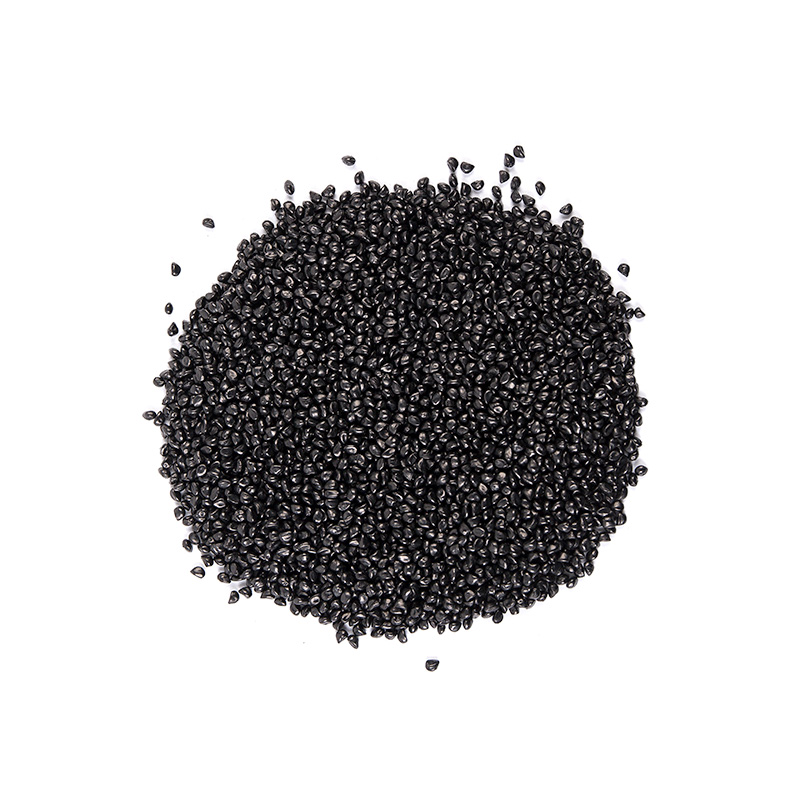
In the global infrastructure sector, High-Density Polyethylene (HDPE) pipes are the preferred medium for water, gas, and telecommunications. However, when these pipes are installed outdoors, they face a silent but destructive enemy: Ultra-Violet (UV) radiation. To combat this, the inclusion of a high-quality carbon black master batch is non-negotiable. Changzhou Runyi New Material Technology Co., Ltd., a leader in color masterbatch production based in the Yangtze River Delta, leverages decades of R&D and professional talent to produce carbon black products that meet rigorous international standards. Our commitment to technological innovation ensures that our masterbatch solutions optimize energy conservation while maximizing the environmental durability of the final product.
The Mechanism of UV Protection in HDPE Pipes
UV radiation causes photo-oxidation in polymers, breaking the molecular chains of the HDPE and leading to embrittlement, cracking, and eventual failure. Carbon black master batch acts as both a light absorber and a free-radical scavenger. The effectiveness of this protection is intrinsically linked to the particle size and the uniformity of the dispersion. According to the 2024 Global Polymer Durability Report by the International Organization for Standardization (ISO), the integration of 2-2.5% fine-particle carbon black can extend the outdoor lifespan of HDPE from less than two years to over fifty years, provided the dispersion meets Category 3 or higher under ISO 18553 standards. This is particularly critical when sourcing wholesale carbon black masterbatch for HDPE pipe, as poor quality leads to localized "hot spots" where UV degradation can accelerate.
Dispersion Quality: Micro-Agglomerates vs. Uniform Matrix
Uniform dispersion ensures that every polymer chain is shielded by carbon black particles, whereas poor dispersion leaves "windows" of unprotected HDPE. Using high concentration carbon black masterbatch for UV protection ensures a denser shielding network, reducing the risk of premature structural failure.
| Dispersion Attribute | Poor Dispersion (Agglomerated) | Excellent Dispersion (Uniform) |
| UV Shielding Efficiency | Low (UV rays penetrate through gaps) | High (Total block of UV radiation) |
| Mechanical Strength | Agglomerates act as stress concentrators | Maintains resin's original tensile properties |
| Surface Quality | Rough, visible "grains" on pipe surface | Smooth, high-gloss professional finish |
| Service Life | 5–10 years (subject to cracking) | 50+ years (per industry standard) |
Impact on Mechanical Properties and Stress Crack Resistance
The role of carbon black master batch extends beyond surface protection; it influences the internal mechanical stability of the pipe. Poorly dispersed carbon black creates micro-inclusions that serve as initiation points for Slow Crack Growth (SCG). Recent technical data from the Plastics Pipe Institute (PPI) 2025 Engineering Forecast indicates that over 70% of field failures in HDPE gas lines are attributed to poor additive dispersion rather than material fatigue. For engineers, utilizing low dilution carbon black masterbatch for industrial plastics is a strategic choice to minimize the presence of large particles (typically those >30 microns) that compromise the integrity of the pipe wall during thermal expansion and contraction cycles.
Source: Plastics Pipe Institute - 2025 Technical Report on PE Pipe Longevity
Tensile Strength and Elongation Comparison
While standard resins exhibit high flexibility, the addition of a premium carbon black masterbatch for geomembranes and pipes must not hinder the material's ability to stretch. High-quality masterbatches use specialized carrier resins that bond perfectly with the HDPE base.
| Performance Metric | Substandard Masterbatch | Changzhou Runyi High-Performance Masterbatch |
| Elongation at Break | Reduced by 30% due to impurities | Maintains >600% (Standard compliant) |
| Melt Flow Rate (MFR) | Erratic, causing thin pipe walls | Stable, ensuring uniform wall thickness |
| Thermal Stability | Low OIT (Oxidative Induction Time) | High OIT (Exceeds 20 minutes at 200°C) |
Technical Advancements in Electret and Fluorocarbon Masterbatches
The evolution of masterbatch technology has led to specialized applications beyond simple pigmentation. Starting in 2020, Changzhou Runyi established a dedicated research team for advanced projects. By utilizing water electret carbon black masterbatch for filtration and fluorocarbon polymer technologies, we have expanded the functionality of the carbon black matrix. These innovations allow for enhanced electrical conductivity and chemical resistance in specialized HDPE conduit systems used in harsh chemical environments or high-voltage cable protection. Our eco friendly carbon black master batch for agriculture also ensures that irrigation pipes remain safe for the environment while resisting the fertilizers and pesticides common in modern farming.
- R&D Innovation: Dedicated lines for water, oil, and fluorocarbon electret masterbatches.
- Environmental Focus: Production processes optimized for energy conservation and zero-waste goals.
- Global Compliance: Products manufactured according to international benchmarks (ASTM/ISO).
- Carrier Compatibility: Tailored resins ensure seamless blending with HDPE, LDPE, and PP.
Frequently Asked Questions (FAQ)
1. What is the ideal carbon black content for outdoor HDPE pipes?
Industry standards generally recommend a 2% to 2.5% final carbon black concentration in the pipe. Sourcing a wholesale carbon black masterbatch for HDPE pipe with a 40% or 50% loading allows for efficient dilution ratios while maintaining UV protection.
2. How can I test the dispersion quality in a batch of pipes?
The most reliable method is the ISO 18553 test, which involves taking microtome sections of the pipe and examining them under a microscope to count and size the carbon black agglomerates.
3. Does carbon black affect the welding of HDPE pipes?
Yes. Excellent dispersion is vital for fusion welding. Large agglomerates of carbon black master batch can lead to weak weld interfaces, increasing the risk of joint failure under pressure.
4. Why is a "solid" carbon black better than a powder?
Using a masterbatch instead of powder prevents contamination, ensures accurate dosing, and significantly improves the health and safety of the production environment by eliminating airborne dust.
5. Can your masterbatch be used in contact with drinking water?
Our carbon black products are produced according to international standards, and we offer specific grades that are compliant with food-contact and potable water regulations, ensuring zero leaching of harmful substances.
prevNo previous article
nextHow to Ensure Optimal Dispersion and Tinting Strength in a High-Quality Carbon Black Master Batch?

Popular products
The main products include various types of plastic film bags, such as takeout packaging bags, express bags, shopping bags, food composite bags, wrapping films, agricultural film, etc., and disposable dining utensils, such as lunch boxes, knives, forks, spoons, etc.
If you are interested in our products, please consult us
CONTACT DETAILS
- Address : 11-1, No. 600 Tongjiang Middle Road, Xinbei District, Changzhou City, Jiangsu Province
- Whatsapp : 0086-13775276672
- Tel: 0086-13401333666
- Email: [email protected]
QUICK LINK
NEWS CENTER
MOBILE TERMINAL
Copyright © Changzhou Runyi New Material Technology Co., Ltd. All Rights Reserved.
Custom China Antibacterial Masterbatch


 CONTACT US