

 English
 中文简体
中文简体 한국어
한국어 عربى
عربى

NEWS
Home / News / Industry News / Material Science of Pigmentation: Achieving Carrier Resin Compatibility for Carbon Black Masterbatch


Material Science of Pigmentation: Achieving Carrier Resin Compatibility for Carbon Black Masterbatch
Article Directory
- 1 The Rheological Imperative: Melt Flow Index Matching for Masterbatch
- 2 Polymer Science Fundamentals: The Polymer Compatibility Guide for Masterbatch
- 3 Structural Integrity: Carbon Black Masterbatch Effect on Tensile Strength and Mechanical Properties
- 4 Procurement Verification: Technical Specifications for Compatibility Assurance
- 5 Frequently Asked Questions (FAQ)
The selection of a Carbon Black Masterbatch is a technical exercise that extends far beyond color matching. For B2B processors, ensuring the masterbatch carrier resin is chemically and rheologically compatible with the final product's base polymer (e.g., PE, PP, PS) is critical. Incompatibility leads to catastrophic failures, including layer separation, poor surface finish, and significant mechanical strength reduction, a direct result of improper Carrier resin compatibility for Carbon Black Masterbatch.
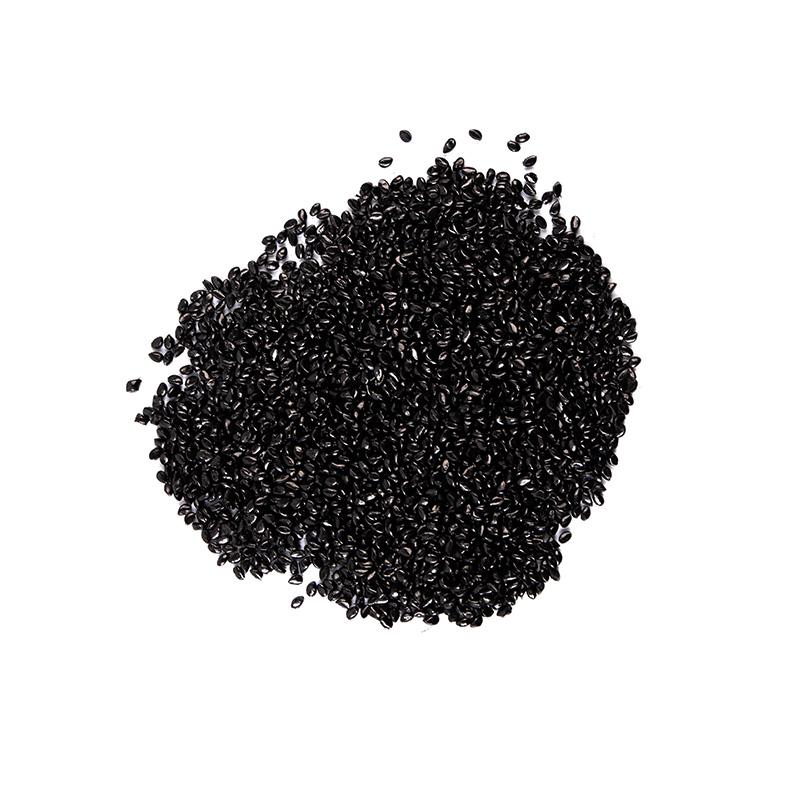
The Rheological Imperative: Melt Flow Index Matching for Masterbatch
Rheological compatibility, primarily governed by the Melt Flow Index (MFI), is essential for uniform dispersion and robust weld-line strength.
Understanding the Melt Flow Index (MFI) Mismatch Risk
- Definition: MFI is a measure of the ease of flow of a thermoplastic melt. The carrier resin of the Carbon Black Masterbatch must flow similarly to the base polymer at processing temperature.
- Mismatch Consequences: If the carrier MFI is significantly lower than the base resin MFI, the masterbatch will flow sluggishly, leading to incomplete mixing and the formation of unpigmented streaks. Conversely, if the carrier MFI is too high, it may separate and weaken the polymer matrix, hindering effective Melt flow index matching for masterbatch.
MFI Delta Specification for Optimal Dispersion and Homogeneity
As a technical rule, the MFI of the masterbatch carrier should generally be equal to or slightly lower than the MFI of the base polymer, ensuring the carrier remains integrated. The MFI Delta ($\Delta MFI$) is a critical specification for assuring homogeneity.
MFI Compatibility Risk Comparison Table
| Carrier MFI vs. Base Resin MFI | Dispersion Quality | Weld-Line Integrity Risk |
|---|---|---|
| Carrier MFI $\approx$ Base MFI (Target $\Delta MFI$ < 20%) | Excellent | Low (Optimal Melt flow index matching for masterbatch) |
| Carrier MFI $\ll$ Base MFI (Significantly Lower) | Poor (Streaking/Agglomerates) | Medium |
| Carrier MFI $\gg$ Base MFI (Significantly Higher) | Good (Flows easily) | High (Increased delamination risk) |
Polymer Science Fundamentals: The Polymer Compatibility Guide for Masterbatch
Beyond rheology, chemical compatibility prevents phase separation at the molecular level. This is the cornerstone of effective Carrier resin compatibility for Carbon Black Masterbatch.
Analyzing Solubility Parameters and Polarity Differences
- "Like Dissolves Like": Polymers are chemically compatible when their solubility parameters ($\delta$) are closely matched. For example, a PE-based carrier is ideal for a PE base resin.
- Polarity Mismatch: Trying to combine a non-polar polymer (like PE) with a highly polar one (like Nylon or EVOH) without a coupling agent will inevitably result in phase separation, which is the root cause of poor mechanical performance. This understanding is key to using any Polymer compatibility guide for masterbatch.
Key Indicators of Incompatibility: Aesthetic and Structural Defects
Incompatibility manifests immediately as visual or structural defects:
- Aesthetic: Surface streaking, "speckling" (due to pigment concentration in the separate phase), and poor gloss finish.
- Structural: Reduced impact strength, lower elongation at break, and most critically, delamination in multi-layer or composite structures.
Polymer Compatibility Matrix Table (Masterbatch Carrier vs. Base Resin)
| Masterbatch Carrier | Compatible Base Resins | Incompatible Base Resins (High Risk) |
|---|---|---|
| PE (Polyethylene) | LLDPE, LDPE, HDPE, EVA | PC, Nylon (PA), PET, PVC |
| PP (Polypropylene) | PP Homopolymer, PP Copolymer | PE, PS (unless specified as Universal Carrier) |
| PS (Polystyrene) | PS, ABS, SAN | PP, PET, Polyolefins |
Structural Integrity: Carbon Black Masterbatch Effect on Tensile Strength and Mechanical Properties
An incompatible Carbon Black Masterbatch acts as a foreign inclusion, disrupting the polymer chain alignment and drastically reducing the mechanical performance of the final product. Understanding the Carbon Black Masterbatch effect on tensile strength is paramount for structural applications.
Understanding the Preventing Delamination with Carbon Black Masterbatch Challenge
Delamination, particularly in co-extruded films or layered structures, occurs when the incompatible carrier phase migrates to the interface between layers. This creates a weak boundary layer that fails under stress. The solution to Preventing delamination with Carbon Black Masterbatch is using a carrier resin identical to the contact layer resin.
Technical Solutions to Preserve Final Product Mechanicals
- Universal Carriers (Limited Use): While some "universal" carriers exist (often based on EVA or specialized polyolefins), these should be used with caution and always technically validated when mechanical properties are critical.
- Low Viscosity Carrier: In certain cases, a very low-viscosity carrier (though higher MFI) is intentionally used to promote rapid diffusion and encapsulation, minimizing its negative Carbon Black Masterbatch effect on tensile strength.
Procurement Verification: Technical Specifications for Compatibility Assurance
B2B buyers must demand technical data sheets that explicitly state the carrier resin type and the MFI (with tolerance) of the Carbon Black Masterbatch. Relying solely on visual checks is inadequate; only full technical specification matching guarantees the product integrity necessary for consistent manufacturing.
Frequently Asked Questions (FAQ)
1. Why is Melt flow index matching for masterbatch so important?
MFI matching ensures the masterbatch flows and mixes uniformly with the base resin. A poor match leads to streaking, poor dispersion, and weak spots in the final product due to phase separation.
2. Can a PP-based masterbatch be used safely with a PE base resin?
While polyolefins (PP and PE) are chemically similar, they are not fully miscible. Using a PP carrier in a PE base resin will lead to poor Carrier resin compatibility for Carbon Black Masterbatch, risking layer separation and reduced mechanical properties.
3. What is the biggest risk of incompatibility in multi-layer film applications?
The biggest risk is Preventing delamination with Carbon Black Masterbatch. If the carrier is incompatible, it acts as a stress concentrator at the layer interfaces, causing the layers to separate under minimal stress.4. How does the Carbon Black Masterbatch effect on tensile strength become negative?The negative effect arises when the incompatible masterbatch carrier creates microscopic domains or voids within the polymer matrix, disrupting the continuous load-bearing polymer chains and lowering the overall tensile strength and elongation at break.
5. What is the best resource for compatibility checks?
The most reliable resource is a technical Polymer compatibility guide for masterbatch provided by the masterbatch supplier, backed by their stated carrier resin type and MFI, which must be cross-referenced with your base polymer specifications.
prevNo previous article
nextEngineered Longevity: Carbon Black Masterbatch UV Stabilization Mechanism and Antioxidant Systems

Popular products
The main products include various types of plastic film bags, such as takeout packaging bags, express bags, shopping bags, food composite bags, wrapping films, agricultural film, etc., and disposable dining utensils, such as lunch boxes, knives, forks, spoons, etc.
If you are interested in our products, please consult us
CONTACT DETAILS
- Address : 11-1, No. 600 Tongjiang Middle Road, Xinbei District, Changzhou City, Jiangsu Province
- Whatsapp : 0086-13775276672
- Tel: 0086-13401333666
- Email: [email protected]
QUICK LINK
NEWS CENTER
MOBILE TERMINAL
Copyright © Changzhou Runyi New Material Technology Co., Ltd. All Rights Reserved.
Custom China Antibacterial Masterbatch


 CONTACT US