

 English
 中文简体
中文简体 한국어
한국어 عربى
عربى

NEWS
Home / News / Industry News / How to Choose Carbon Black Masterbatch for Plastic Coloring, UV Protection and Industrial Applications


How to Choose Carbon Black Masterbatch for Plastic Coloring, UV Protection and Industrial Applications
Article Directory
Choosing the right Carbon Black Masterbatch affects far more than the final color of a plastic part. The carbon black grade, its dispersion quality, and the carrier resin used all influence UV resistance, mechanical strength, and processing stability. For manufacturers working across injection molding, blow molding, film extrusion, and pipe production, selecting a masterbatch that matches both the polymer system and the end-use environment is a technical decision, not just a cosmetic one.
Types of Carbon Black Masterbatch
Carbon black masterbatch is not a single product but a family of formulations distinguished by carrier resin, carbon black loading, and particle grade. Matching the type to the base polymer and process is the starting point for any coloring decision.
PE Carbon Black Masterbatch
Formulated for LLDPE, LDPE, and HDPE. Common in pipe extrusion, geomembranes, and blown film where melt flow matching prevents streaking.
PP Carbon Black Masterbatch
Tailored for injection molded parts, woven sacks, and automotive components, with carrier resin and dispersing agents suited to PP's shear behavior.
PVC Black Masterbatch
Built for heat-sensitive PVC pipe, profile, and cable applications using stabilizer-compatible carbon black to avoid degradation.
High Concentration Grade
Carries a greater proportion of carbon black, lowering the letdown ratio and reducing material handling, but demanding stronger dispersion during compounding.
| Masterbatch Type | Typical Carrier Resin | Common Applications |
|---|---|---|
| PE Carbon Black Masterbatch | LLDPE / LDPE / HDPE | Pipe, film, geomembrane |
| PP Carbon Black Masterbatch | Homopolymer / Copolymer PP | Injection parts, woven sacks, automotive |
| PVC Black Masterbatch | Rigid / Flexible PVC | Pipe, profile, cable jacketing |
Applications of Carbon Black Masterbatch
Carbon black masterbatch is used across nearly every plastic processing method, but the required particle grade, dispersion level, and loading percentage shift depending on the process and the part's end use.
-
Plastic Injection Molding
Consistent color and flow are the priority. Injection-grade masterbatch uses finer, well-wetted particles to avoid visible black specks.
-
Blow Molding Products
Containers and industrial drums need uniform color plus outdoor UV resistance for storage and transport use.
-
Film and Sheet Production
Highly sensitive to dispersion quality, since agglomerates can cause film breaks or visible gels.
-
Pipe Extrusion Industry
Relies on carbon black for long-term UV stability during storage, installation, and burial exposure.
-
Automotive Plastic Parts
Interior trim and exterior fascia parts use carbon black for both finish and added UV/thermal stability.
Key Performance Properties Buyers Should Evaluate
Carbon black is one of the few colorants that also functions as a working UV stabilizer — which is why performance evaluation matters as much as color match.
Dispersion Quality
Even distribution prevents specks, streaks, and stress points in thin-walled parts.
UV Resistance
Absorbs and scatters UV radiation, protecting the polymer chain from photo-degradation.
Tinting Strength
Higher tinting power achieves deep black at lower addition rates.
Thermal Stability
Withstands extended heat exposure without degrading carrier resin or color.
- Check dispersion using a microscope or dispersion index test before scaling up production
- Match carbon black loading percentage to the part's UV exposure requirements
- Confirm carrier resin compatibility with the base polymer's melt index
- Request thermal stability data if the process involves extended residence time
Processing and Manufacturing Considerations
How a masterbatch is produced and how it is processed downstream both affect the final part quality.
Confirm the letdown ratio
Verify the recommended ratio with the supplier before production trials begin.
Run a trial batch
Check color consistency and surface finish on a small run first.
Adjust processing parameters
Change screw speed and temperature incrementally, not all at once.
Document working settings
Record parameters once color and dispersion are confirmed stable.
The extrusion compounding process uses a twin-screw extruder to melt-compound carbon black into carrier resin under controlled shear, breaking down agglomerates for uniform dispersion. Carrier resin selection should keep melt flow reasonably close to the base resin to avoid flow marks, and screw speed and temperature control during downstream mixing determine whether the masterbatch blends fully or leaves visible streaks.
FAQ
What is carbon black masterbatch?
A concentrated pellet formulation of carbon black pigment pre-dispersed in a carrier resin, used to color and stabilize plastic products during processing.
What is carbon black used for in plastics?
Beyond coloring, it provides UV protection, some conductivity in specialty grades, and can aid mechanical reinforcement depending on grade and loading.
Is carbon black masterbatch safe?
It is a widely used industrial pigment. Manufacturers should follow supplier safety data sheets and standard handling practices.
How much masterbatch is added to plastic?
Letdown ratios vary by concentration and desired shade — confirm the exact ratio with the product's technical data sheet.
What is the difference between pigment and masterbatch?
Raw pigment is unformulated powder that's harder to disperse and handle; masterbatch is pre-dispersed for accurate, safer dosing.
Can carbon black improve UV resistance?
Yes — it's one of the more effective UV stabilizers for polyolefins, commonly specified for pipe and geomembrane products.
Selecting the right carbon black masterbatch comes down to matching carrier resin and carbon black grade to both the base polymer and the processing method, then verifying dispersion quality and UV performance before committing to full-scale production. Balancing strong dispersion with adequate UV protection is usually what separates a masterbatch that performs reliably over the product's service life from one that only looks acceptable at the point of molding.

Popular products
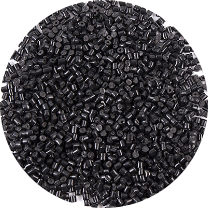
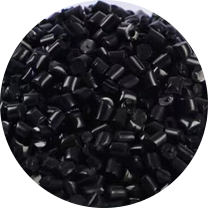
The main products include various types of plastic film bags, such as takeout packaging bags, express bags, shopping bags, food composite bags, wrapping films, agricultural film, etc., and disposable dining utensils, such as lunch boxes, knives, forks, spoons, etc.
If you are interested in our products, please consult us
CONTACT DETAILS
- Address : 11-1, No. 600 Tongjiang Middle Road, Xinbei District, Changzhou City, Jiangsu Province
- Whatsapp : 0086-13775276672
- Tel: 0086-13401333666
- Email: [email protected]
QUICK LINK
NEWS CENTER
MOBILE TERMINAL
Copyright © Changzhou Runyi New Material Technology Co., Ltd. All Rights Reserved.
Custom China Antibacterial Masterbatch


 CONTACT US